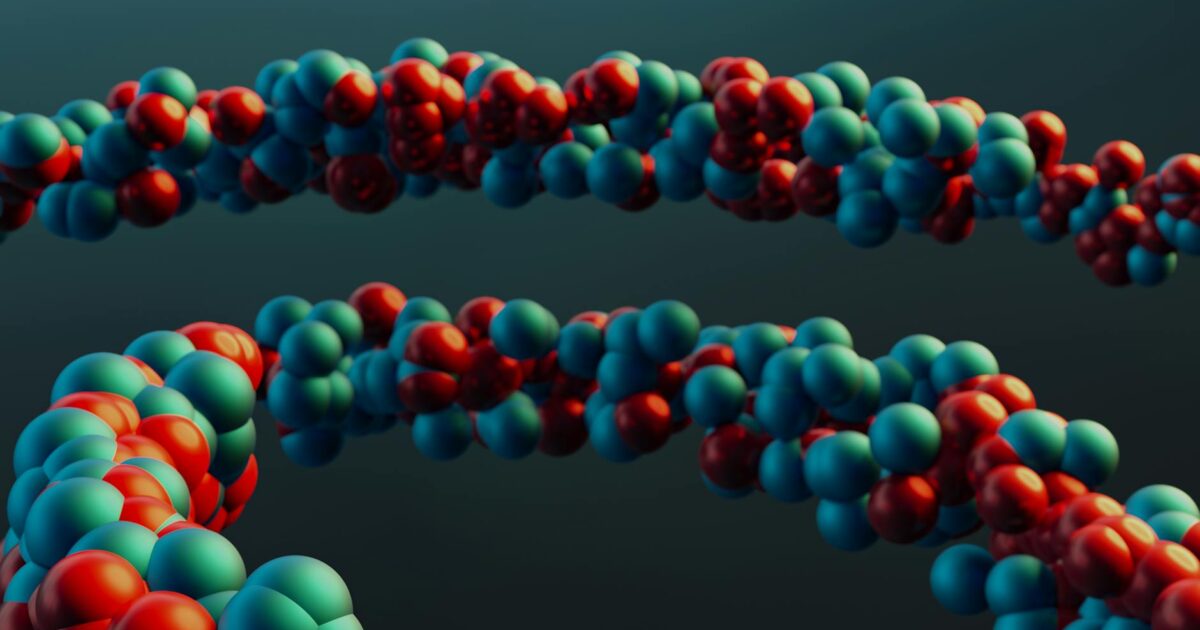
Imagine building with LEGOs. Some blocks have 2 studs, some have 4, some have 8. The number of studs determines how many other blocks they can connect to, and how they connect. In the atomic world, the ‘studs’ are called valence electrons, and they dictate an atom’s entire personality – its bonding power, its chemical reactions, and its role in the universe. So, when we ask, how many valence electrons does carbon have, we’re really asking about the atom that forms the backbone of life itself.
For carbon, the answer is a precise and remarkable 4. This isn’t just a random number; it’s the fundamental reason carbon is the star player in organic chemistry and, consequently, in every living organism on Earth. In my 15 years of working with chemical principles and their applications, I’ve seen firsthand how this simple count of 4 valence electrons unlocks incredible complexity and diversity.
Table of Contents
Carbon’s Atomic Blueprint: Unpacking the Electron Configuration
Why 4 Valence Electrons? The Stability Factor
Carbon’s Incredible Bonding Power: The Role of 4 Valence Electrons
Life’s Building Block: How 4 Valence Electrons Shape Organic Chemistry
A Common Misconception About Carbon’s Valence
Expert Tip: Visualizing Carbon’s Bonds
Introduction: The Humble Atom with a Big Impact
The question, how many valence electrons does carbon have, might seem small, but its implications are colossal. Carbon, with its atomic number of 6, has a total of 6 electrons. However, only the electrons in the outermost shell, the valence shell, are involved in chemical bonding. For carbon, this outermost shell contains exactly 4 electrons. This precise number is the secret sauce behind carbon’s ability to form the vast array of complex molecules that constitute life and countless synthetic materials.
Consider this: there are an estimated 10^25 to 10^30 carbon atoms on Earth. The sheer ubiquity and versatility of carbon compounds stem directly from the bonding capabilities dictated by those 4 valence electrons. In my studies, understanding this core concept was the gateway to grasping organic chemistry.
Carbon’s Atomic Blueprint: Unpacking the Electron Configuration
To truly understand why carbon has 4 valence electrons, we need to peek inside its atomic structure. An atom is made up of a nucleus (containing protons and neutrons) and electrons that orbit the nucleus in specific energy levels or shells. The first shell can hold a maximum of 2 electrons, and the second shell can hold up to 8 electrons.
Carbon’s atomic number is 6, meaning it has 6 protons and, in a neutral atom, 6 electrons. These electrons are arranged in shells. The first shell, the innermost one, is filled with 2 electrons. The remaining 4 electrons then occupy the second, outermost shell. This configuration is written as 1s²2s²2p². The ‘2’ in 2s² and the ‘2’ in 2p² together represent the 4 electrons in the outermost energy level (n=2). Therefore, carbon has 4 valence electrons.
Why 4 Valence Electrons? The Stability Factor
Atoms tend to achieve a stable electron configuration, which usually means having a full outermost electron shell. For elements in the second period (like carbon), a full outer shell means having 8 valence electrons (the ‘octet rule’). Carbon, with only 4 valence electrons, is exactly halfway to achieving this stable octet.
This halfway point is crucial. It means carbon doesn’t easily gain 4 electrons (which would require a lot of energy) nor does it easily lose 4 electrons. Instead, the most energetically favorable path for carbon is to share its 4 valence electrons with other atoms. This drive to share electrons is the fundamental reason behind carbon’s unparalleled bonding capabilities.
The quest for stability is a driving force in chemistry. For elements like oxygen (6 valence electrons), gaining 2 is easier than losing 6. For sodium (1 valence electron), losing 1 is much easier than gaining 7. Carbon, sitting right in the middle with 4, finds its optimal stability through sharing.
Carbon’s Incredible Bonding Power: The Role of 4 Valence Electrons
The fact that carbon has 4 valence electrons means it can form up to 4 covalent bonds. A covalent bond is formed when two atoms share a pair of electrons. Because carbon has 4 electrons to share, it can form bonds with up to 4 other atoms simultaneously. This is a game-changer.
Think about it: a single carbon atom can bond with 4 hydrogen atoms (forming methane, CH₄). It can bond with another carbon atom, and then those carbon atoms can bond with more carbon atoms, creating long chains, branched structures, and rings. This ability to self-link (catenation) is unique and incredibly powerful. For instance, a simple hydrocarbon chain can extend to hundreds or even thousands of carbon atoms long, forming the basis of plastics and fuels.
Furthermore, these 4 valence electrons allow carbon to form different types of bonds:
- Single Bonds: Sharing one pair of electrons (e.g., C-C, C-H).
- Double Bonds: Sharing two pairs of electrons (e.g., C=C, C=O).
- Triple Bonds: Sharing three pairs of electrons (e.g., C≡C, C≡N).
This versatility in bond types, all stemming from those 4 valence electrons, allows carbon to create an astonishing diversity of molecular structures with vastly different properties.
Life’s Building Block: How 4 Valence Electrons Shape Organic Chemistry
Organic chemistry, the study of carbon compounds, is essentially the study of life’s molecular machinery. Every protein, DNA strand, carbohydrate, and lipid is built upon a carbon framework. The reason carbon is so central to life is entirely due to its 4 valence electrons.
These 4 electrons enable carbon to form stable bonds with itself and with other elements crucial for life, such as hydrogen (H), oxygen (O), nitrogen (N), phosphorus (P), and sulfur (S). This creates a robust and diverse molecular architecture necessary for biological processes. Without carbon’s ability to form these complex, stable structures through covalent bonding, life as we know it simply could not exist.
In the field of synthetic chemistry, understanding carbon’s 4 valence electrons allows chemists to design and create new materials, medicines, and technologies. From advanced polymers to life-saving drugs, the principles of carbon bonding are paramount.
A Common Misconception About Carbon’s Valence
A frequent mistake I see students make is confusing the total number of electrons an atom has with its valence electrons. For example, knowing carbon has 6 electrons is only the first step. The crucial part is understanding that only the electrons in the outermost shell count as valence electrons.
Another common error is assuming carbon must always form exactly 4 bonds. While this is its most common and stable state, understanding orbital hybridization (sp, sp², sp³) reveals how these 4 valence electrons can rearrange their spatial orientation to form single, double, or triple bonds, influencing molecular geometry and reactivity. However, the number of valence electrons remains 4, dictating the total number of bonds it can form or the electrons it can share to achieve stability.
Frequently Asked Questions
How many valence electrons does carbon have?
Carbon has exactly 4 valence electrons. These are the electrons located in its outermost electron shell, and they are the ones primarily involved in chemical bonding and determining the element’s chemical properties.
What is the electron configuration of carbon?
The electron configuration of carbon is 1s²2s²2p². This means it has 2 electrons in the first energy shell and 4 electrons in the second, outermost (valence) shell.
Why is the number of valence electrons important for carbon?
The 4 valence electrons are critical because they allow carbon to form up to 4 stable covalent bonds. This versatility enables carbon to create the vast and complex molecular structures essential for life and countless materials.
Can carbon form more or fewer than 4 bonds?
While carbon most commonly forms 4 bonds to achieve stability, its valence electrons can participate in forming single, double, or triple bonds. In certain complex organic molecules or reaction intermediates, apparent deviations can occur, but the fundamental bonding capacity stems from its 4 valence electrons.
What kind of bonds does carbon typically form?
Carbon typically forms covalent bonds, where it shares its valence electrons with other atoms. It can form single, double, and triple covalent bonds, contributing to the immense diversity of organic compounds.
Conclusion: The Power of Four
So, to circle back to our main question: how many valence electrons does carbon have? The definitive answer is 4. This seemingly simple number is the cornerstone of chemistry, particularly organic chemistry. It’s the reason carbon can create chains, rings, and complex three-dimensional structures, forming the basis of all known life and a vast array of synthetic materials we use daily.
From the air we breathe (CO₂) to the fuels that power our world and the very DNA that makes us unique, carbon’s 4 valence electrons are the unsung heroes. Understanding this fundamental aspect of the carbon atom is key to appreciating the complexity and beauty of the chemical world around us. Keep exploring, and you’ll find these 4 electrons are responsible for more than you can imagine!




Sabrina
Expert contributor to OrevateAI. Specialises in making complex AI concepts clear and accessible.