
Ever wondered how your phone recognizes your face, how streaming services recommend movies, or how self-driving cars navigate the roads? The answer, in large part, lies in the fascinating world of neural networks. If you’re curious about the engine driving much of modern artificial intelligence, you’ve come to the right place. This guide is designed to be your practical, no-nonsense introduction to neural networks.
Last updated: April 26, 2026 (Source: tensorflow.org)
Latest Update (April 2026)
Recent developments continue to highlight the expanding influence of neural networks across various domains. As reported by Britannica on April 21, 2026, large language models like ChatGPT continue to evolve, showcasing sophisticated natural language processing capabilities that are built upon advanced neural network architectures. These models are increasingly integrated into everyday applications, from content creation tools to sophisticated chatbots. Furthermore, the field of reinforcement learning, a critical area for developing autonomous systems, is seeing progress in approximate solution methods, according to recent discussions on platforms like Towards Data Science as of April 24, 2026. These advancements are crucial for creating more intelligent and adaptive AI agents capable of complex decision-making in dynamic environments.
The ongoing integration of AI, powered by neural networks, is also evident in major technological and business shifts. As noted by Britannica on April 22, 2026, figures like Elon Musk continue to be at the forefront of innovation, with their ventures heavily relying on AI advancements, including those driven by neural networks, to push boundaries in areas like electric vehicles and space exploration. The ability of neural networks to process vast datasets and identify intricate patterns fuels these ambitious projects.
The journey into understanding neural networks is more relevant than ever. They are the backbone of deep learning, a subfield of machine learning that has achieved remarkable breakthroughs. But the term itself can sound intimidating. My goal here is to demystify neural networks, explaining them in a way that’s accessible, informative, and actionable. We’ll cover what they are, how they function at a basic level, and what you need to know to start exploring them yourself.
Table of Contents
- What Exactly Are Neural Networks?
- The Biological Inspiration: Mimicking the Brain
- How Neural Networks Actually Work: The Core Components
- Layers and Nodes: The Building Blocks
- The Learning Process: Training a Neural Network
- Activation Functions: Adding Non-Linearity
- Backpropagation: The Secret Sauce of Learning
- Common Types of Neural Networks
- Real-World Applications of Neural Networks
- Getting Started: Practical Tips for Your Neural Network Journey
- A Common Mistake to Avoid
- Frequently Asked Questions
What Exactly Are Neural Networks?
At its heart, a neural network is a computational model inspired by the structure and function of biological neural networks, like the human brain. These networks are designed to recognize patterns in data. They are a core component of machine learning and, particularly, deep learning. Unlike traditional programming, where you explicitly tell a computer what to do with specific rules, neural networks learn from examples. You feed them data, and they adjust their internal parameters to achieve a desired outcome, such as classifying an image or predicting a value.
Think of it like teaching a child. You don’t write a complex algorithm for them to identify a cat. Instead, you show them pictures of cats, point them out in real life, and say, “That’s a cat.” Over time, they learn the features that define a cat – the pointy ears, the whiskers, the tail – and can identify new cats they’ve never seen before. Neural networks operate on a similar principle, learning from vast amounts of data to make predictions or decisions.
The Biological Inspiration: Mimicking the Brain
The concept of artificial neural networks (ANNs) draws heavily from our understanding of the human brain. Our brains are composed of billions of neurons, interconnected in a complex web. Each neuron receives signals from other neurons, processes them, and transmits signals to others. This distributed processing allows for incredible feats of learning, memory, and cognition. As of 2026, our understanding of the brain continues to evolve, providing richer insights for AI research.
Artificial neural networks attempt to replicate this structure and function using mathematical models and algorithms. While they are a simplified abstraction, the core idea remains the same: interconnected processing units (artificial neurons or nodes) that work together to learn and process information. This biological inspiration is what gives ANNs their power to handle complex, non-linear problems that are difficult to solve with traditional rule-based programming.
How Neural Networks Actually Work: The Core Components
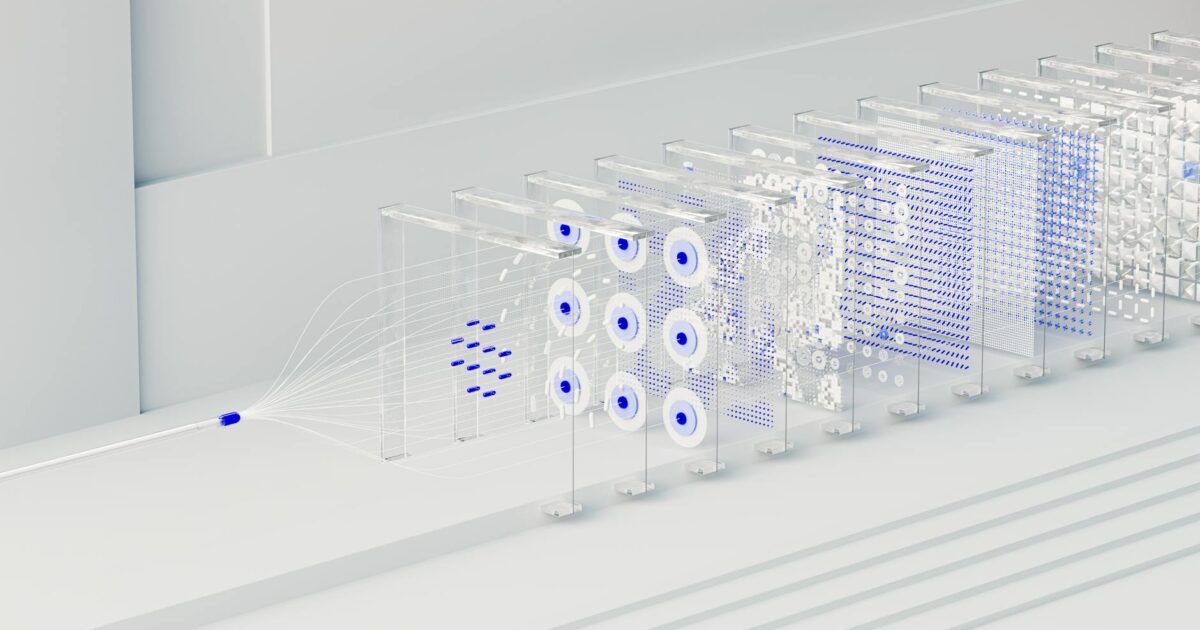
To understand how neural networks function, let’s break down their fundamental components. A typical neural network consists of interconnected layers of nodes, also known as artificial neurons.
Layers and Nodes: The Building Blocks
Neural networks are organized into layers of interconnected nodes, also known as artificial neurons. These layers are typically:
- Input Layer: This is where the raw data is fed into the network. Each node in the input layer represents a feature of the data. For example, if you’re analyzing images, each node might represent a pixel’s intensity.
- Hidden Layers: These layers lie between the input and output layers. They perform complex computations and feature extraction. A network can have one or many hidden layers; networks with multiple hidden layers are the basis of deep learning. The more hidden layers, the ‘deeper’ the network. As of 2026, ‘deep’ networks with dozens or even hundreds of layers are common in state-of-the-art models.
- Output Layer: This layer produces the final result of the network’s computation. For a classification task, it might output the probability of an input belonging to different categories. For a regression task, it might output a single predicted value.
Each node within a layer is connected to nodes in the next layer. These connections have associated weights, which are numerical values that determine the strength of the connection. Think of weights as the ‘importance’ assigned to a particular input signal. During the learning process, these weights are adjusted.
The Learning Process: Training a Neural Network
Neural networks learn through a process called training. This involves feeding the network a large dataset of examples, where each example includes both the input data and the desired output (the ‘ground truth’). The network then goes through several steps:
- Forward Pass: The input data is passed through the network, layer by layer. Each node performs a calculation based on its inputs, weights, and an activation function, ultimately producing an output.
- Error Calculation: The network’s output is compared to the desired output. A ‘loss function’ (or cost function) quantifies the difference or error between the predicted output and the actual target. Common loss functions include Mean Squared Error for regression and Cross-Entropy for classification.
- Backward Pass (Backpropagation): This is where the magic happens. The error is propagated backward through the network, from the output layer to the input layer. This process calculates how much each weight contributed to the overall error.
- Weight Update: Based on the calculated error contribution, an optimization algorithm (like Gradient Descent or its variants, e.g., Adam, RMSprop) adjusts the weights to minimize the error. This iterative process of forward pass, error calculation, backpropagation, and weight update is repeated thousands or millions of times until the network achieves a satisfactory level of performance.
Activation Functions: Adding Non-Linearity
Within each node (except typically in the input layer), an activation function is applied to the weighted sum of inputs. This function introduces non-linearity into the network, allowing it to learn complex relationships in the data. Without activation functions, a neural network would essentially be performing linear transformations, limiting its ability to model real-world phenomena. Common activation functions include:
- Sigmoid: Squashes values between 0 and 1.
- ReLU (Rectified Linear Unit): Outputs the input directly if it’s positive, otherwise outputs zero. It’s computationally efficient and widely used.
- Tanh (Hyperbolic Tangent): Squashes values between -1 and 1.
- Softmax: Often used in the output layer for multi-class classification problems, it converts outputs into probability distributions.
The choice of activation function can significantly impact the network’s performance and training speed.
Backpropagation: The Secret Sauce of Learning
Backpropagation is the cornerstone of how most neural networks learn. It’s an algorithm that efficiently calculates the gradient of the loss function with respect to each weight in the network. This gradient tells us the direction and magnitude of the change needed for each weight to reduce the error. The process involves applying the chain rule of calculus to compute these gradients layer by layer, starting from the output and moving backward towards the input. This allows for systematic adjustment of millions of weights, enabling the network to ‘learn’ from its mistakes.
Common Types of Neural Networks
While the fundamental principles remain the same, different types of neural networks are designed for specific tasks:
- Feedforward Neural Networks (FNNs): The simplest type, where information flows in one direction from input to output, without loops. They are suitable for basic classification and regression tasks.
- Convolutional Neural Networks (CNNs): These are particularly effective for image and video analysis. CNNs use convolutional layers to automatically and adaptively learn spatial hierarchies of features from the input. They excel at tasks like image recognition, object detection, and medical image analysis. As of 2026, CNNs are a standard tool in computer vision.
- Recurrent Neural Networks (RNNs): Designed to handle sequential data, such as text, speech, or time series. RNNs have loops that allow information to persist, enabling them to ‘remember’ previous inputs. Variants like Long Short-Term Memory (LSTM) and Gated Recurrent Unit (GRU) networks have been developed to address the vanishing gradient problem and capture longer-term dependencies. They are fundamental to natural language processing (NLP) tasks like translation and sentiment analysis.
- Transformers: A more recent architecture that has revolutionized NLP. Transformers rely on attention mechanisms to weigh the importance of different parts of the input sequence, allowing them to process data in parallel and capture long-range dependencies more effectively than traditional RNNs. Models like GPT-4 (released in 2023) and its successors, built on transformer architectures, demonstrate remarkable capabilities in text generation and understanding.
- Generative Adversarial Networks (GANs): Composed of two neural networks (a generator and a discriminator) that compete against each other. GANs are used for generating new data that resembles the training data, such as realistic images, music, or text.
Real-World Applications of Neural Networks
Neural networks are no longer theoretical concepts; they power many of the technologies we use daily:
- Image and Facial Recognition: Used in smartphones for unlocking, security systems, and photo tagging.
- Natural Language Processing (NLP): Powers virtual assistants (like Siri, Alexa, Google Assistant), language translation tools, sentiment analysis, and chatbots. Large language models, such as those from OpenAI, are a prime example of advanced NLP driven by neural networks.
- Recommendation Systems: Streaming services (Netflix, Spotify), e-commerce sites (Amazon), and social media platforms use neural networks to suggest content or products tailored to individual user preferences.
- Autonomous Vehicles: Neural networks are critical for processing sensor data (cameras, lidar) to perceive the environment, make driving decisions, and control the vehicle.
- Healthcare: Used for disease diagnosis from medical images (X-rays, MRIs), drug discovery, and personalized treatment plans.
- Finance: Employed in fraud detection, algorithmic trading, credit scoring, and risk management.
- Gaming: AI opponents and procedural content generation often utilize neural networks.
Getting Started: Practical Tips for Your Neural Network Journey
Embarking on your journey with neural networks can be exciting. Here are some practical tips:
- Start with the Fundamentals: Ensure you have a solid grasp of linear algebra, calculus, and probability. These are the mathematical underpinnings of neural networks.
- Learn a Programming Language: Python is the de facto standard for machine learning due to its extensive libraries and community support.
- Explore Key Libraries: Familiarize yourself with libraries like TensorFlow, PyTorch, and Keras. These frameworks provide high-level APIs to build and train neural networks efficiently. As of April 2026, TensorFlow and PyTorch are the leading contenders, offering extensive documentation and active communities.
- Work Through Tutorials and Courses: Numerous online resources offer excellent tutorials and courses. Platforms like Coursera, edX, fast.ai, and official documentation from TensorFlow and PyTorch are invaluable.
- Experiment with Datasets: Start with well-known datasets like MNIST (handwritten digits) or CIFAR-10 (small images) to build and test your first models.
- Understand the Theory: While libraries abstract much of the complexity, understanding the underlying concepts (like activation functions, backpropagation, and optimizers) is crucial for debugging and improving your models.
- Join the Community: Engage with online forums, developer communities, and local meetups. Learning from others and sharing your progress can be highly motivating.
A Common Mistake to Avoid
A frequent pitfall for beginners is focusing solely on complex architectures without understanding the basics. It’s easy to be drawn to the latest deep learning models, but without a firm grasp of core concepts like data preprocessing, feature engineering (though less critical with deep learning, still relevant), choosing appropriate loss functions, and understanding overfitting/underfitting, even advanced models can fail to perform. Always ensure your foundational knowledge is strong before diving into highly complex architectures.
Frequently Asked Questions
What is the difference between AI, Machine Learning, and Deep Learning?
Artificial Intelligence (AI) is the broadest concept, referring to machines that can perform tasks that typically require human intelligence. Machine Learning (ML) is a subset of AI that enables systems to learn from data without being explicitly programmed. Deep Learning (DL) is a further subset of ML that uses neural networks with multiple layers (deep neural networks) to learn complex patterns directly from raw data. As of 2026, deep learning is responsible for many of the most impressive AI advancements.
How much data is needed to train a neural network?
The amount of data required varies significantly depending on the complexity of the problem and the neural network architecture. Simple tasks with well-defined features might require thousands of data points. However, for complex tasks like image recognition or natural language understanding, state-of-the-art models often require millions or even billions of data points. Techniques like transfer learning, where a model pre-trained on a large dataset is fine-tuned for a specific task, can help reduce data requirements.
Are neural networks biased?
Yes, neural networks can exhibit bias. Since they learn from data, any biases present in the training data will likely be learned and amplified by the network. This can lead to unfair or discriminatory outcomes, especially in applications like hiring, loan applications, or facial recognition. Addressing data bias and developing fairness-aware algorithms are active areas of research in 2026.
What are the ethical considerations of using neural networks?
The increasing power of neural networks raises significant ethical concerns. These include issues of privacy (due to large data collection), job displacement (automation), accountability (when AI makes mistakes), the spread of misinformation (deepfakes, AI-generated text), and the potential for misuse in surveillance or autonomous weapons. Responsible development and deployment require careful consideration of these ethical implications.
Can neural networks truly understand or think?
This is a philosophical debate that continues in 2026. Current neural networks are sophisticated pattern-matching machines. They excel at specific tasks they are trained for but do not possess consciousness, self-awareness, or general understanding in the human sense. While they can simulate intelligent behavior, they do not ‘think’ or ‘understand’ like humans do. Their capabilities are limited to the data they have processed and the algorithms they employ.
Conclusion
Neural networks represent a powerful paradigm in artificial intelligence, enabling machines to learn from data and perform complex tasks that were once the sole domain of humans. From recognizing faces to powering virtual assistants and self-driving cars, their impact is profound and continues to grow. By understanding their core components, learning processes, and various architectures, you can begin to appreciate the technology driving many of the innovations of 2026 and beyond. Whether you’re a student, a developer, or simply curious about AI, this introduction provides the foundational knowledge needed to explore this exciting field further.
Sabrina
2 writes for OrevateAi with a focus on agriculture, ai ethics, ai news, ai tools, apparel & fashion. Articles are reviewed before publication for accuracy.


