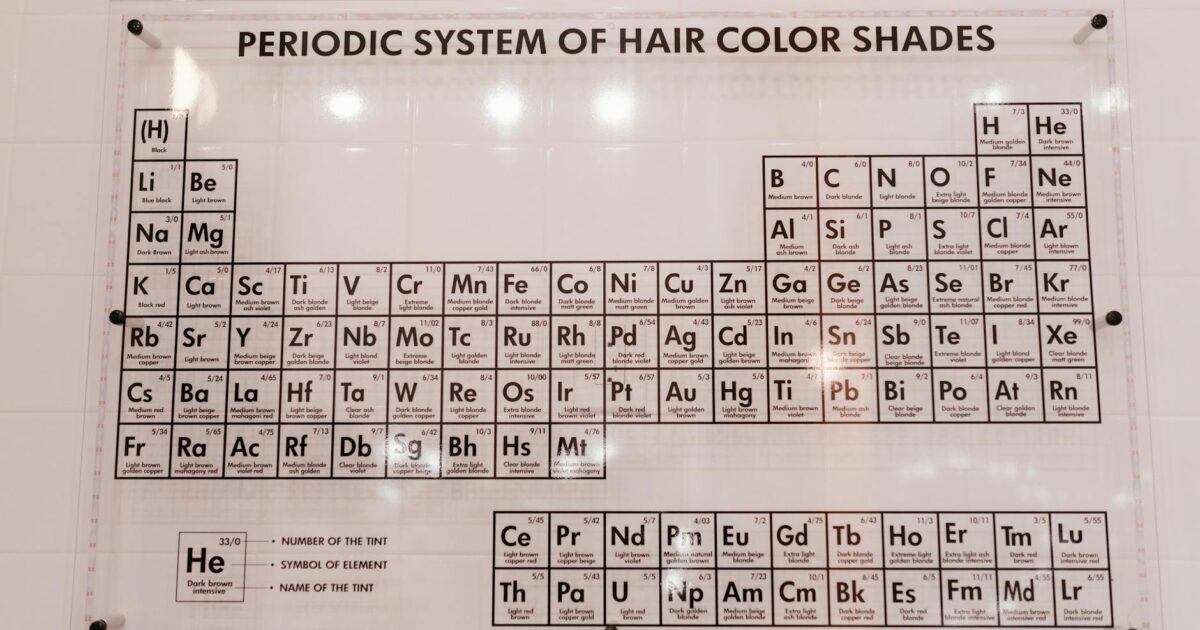
The periodic table of elements, while appearing complex initially, is an exceptionally organized chart that arranges elements by atomic number and recurring chemical properties. A fundamental aspect of understanding this arrangement is knowing where metals are located on a periodic table. This knowledge is key to comprehending an element’s characteristics and behavior, revealing the clever design behind this scientific tool.
Latest Update (April 2026)
Recent scientific breakthroughs continue to refine our understanding of metallic elements. In April 2026, researchers at The University of Manchester announced the stabilization of a rare three-atom bismuth ring, a development that offers new insights into the structure and properties of metallic compounds, as reported by EurekAlert! and The University of Manchester. This discovery challenges previous assumptions about the stability of small metallic clusters and could pave the way for novel materials with unique electronic or catalytic properties. Furthermore, ongoing research, as highlighted by publications in journals like Nature, explores complex metallic structures, such as those found in diuranium and dithorium inverse-sandwich-type complexes, pushing the boundaries of inorganic chemistry and materials science.
The chemical industry’s focus remains on the practical applications of metals. For instance, the persistent demand for elements like iron, a cornerstone of modern infrastructure and manufacturing, drives ongoing exploration into more efficient extraction and recycling processes. Britannica’s detailed profiles of elements like iron underscore their enduring importance. Simultaneously, the unique properties of certain metals, such as mercury’s well-known liquid state at room temperature, continue to be a topic of interest for both scientific curiosity and industrial application, as discussed in recent articles from sources like MSN.
Identifying the ‘Staircase’ Line
To pinpoint the location of metals, identify the distinctive ‘staircase’ line. This zigzagging line, starting from boron (B) and extending diagonally to astatine (At), generally separates metals from nonmetals. Elements bordering this line, known as metalloids or semimetals, exhibit properties that blend those of metals and nonmetals. This dividing line is the primary indicator of where metals are predominantly found on the periodic table.
The Dominance of Metals
The majority of elements on the periodic table are metals. They occupy the left side, the center, and the lower sections. Specifically, all elements to the left of the ‘staircase’ line are classified as metals. This extensive region includes several significant groups:
- Alkali Metals (Group 1): These are highly reactive elements, including lithium (Li), sodium (Na), potassium (K), rubidium (Rb), cesium (Cs), and francium (Fr). They readily lose their single valence electron, making them potent reducing agents.
- Alkaline Earth Metals (Group 2): These reactive metals, such as beryllium (Be), magnesium (Mg), calcium (Ca), strontium (Sr), barium (Ba), and radium (Ra), are slightly less reactive than alkali metals but still readily form positive ions.
Transition and Inner Transition Metals
Moving rightwards across the periodic table, the large block of transition metals spans Groups 3 through 12 in the table’s center. This block includes numerous well-recognized elements like iron (Fe), copper (Cu), gold (Au), silver (Ag), platinum (Pt), and zinc (Zn), prized for their strength, conductivity, and appearance. These metals are vital for numerous industrial and technological applications, from construction to electronics.
Transition metals are characterized by having partially filled d subshells. This electron configuration contributes to their variable oxidation states, ability to form colored compounds, and catalytic activity. Their diverse properties make them indispensable in alloys, catalysts, pigments, and electroplating.
Further down, separated from the main body of the periodic table, are the inner transition metals: the lanthanides (elements 57-71) and actinides (elements 89-103). These are also metals, possessing unique characteristics essential for specialized uses. The lanthanides, often referred to as rare earth elements, are critical components in modern electronics, magnets, and lasers. The actinides, many of which are radioactive, are significant in nuclear energy and research. As of 2026, the study of these elements continues to reveal new possibilities for advanced materials and energy solutions.
Post-Transition Metals
Even some elements in the p-block, situated to the right of the transition metals but still to the left of the staircase, are classified as metals. These post-transition metals, sometimes called basic metals, include elements like aluminum (Al), gallium (Ga), indium (In), tin (Sn), thallium (Tl), lead (Pb), and bismuth (Bi). While they may sometimes lack the pronounced metallic luster of transition metals, their electrical conductivity, malleability, and ductility confirm their metallic classification. Their position on the periodic table helps predict these properties, which differ from those of their nonmetal neighbors.
Post-transition metals often exhibit properties that are intermediate between those of transition metals and metalloids. For example, aluminum is known for its lightweight strength and corrosion resistance, making it ubiquitous in aerospace and packaging. Lead, despite its toxicity, remains important in batteries and radiation shielding. Tin is widely used in solders and protective coatings.
Metals in the Modern Economy and Technology (as of April 2026)
In today’s global economy, understanding the distribution and properties of metals is more important than ever. The demand for essential metals and minerals continues to drive innovation and resource management. Recent analyses highlight critical choices in their procurement and use, with a growing emphasis on sustainability and ethical sourcing.
For instance, heavy metals, vital for technology production, are often found in specific geological formations, underscoring the geographical concentration of valuable resources. As of April 2026, metals are increasingly viewed as a strategic asset for investment. Experts suggest they serve as essential hedges against market volatility, offering an alternative to traditional investments like bonds and stocks, according to financial analysts. Elements like chromium (Cr), recognized for its essential roles in metallurgy and as a potentially vital nutrient, prompt ongoing scientific inquiry into its biological and industrial significance.
The technological landscape of 2026 relies heavily on a diverse range of metals. From the conductive pathways in smartphones to the structural components of electric vehicles, metals are indispensable. The development of new alloys and composite materials continues to push the performance limits of existing metals, enabling advancements in fields such as renewable energy, advanced computing, and space exploration. The extraction and processing of these metals are also subjects of intense research, with a focus on reducing environmental impact and increasing efficiency.
Nonmetals and Metalloids: The Other Side of the Table
In contrast to the expansive metallic regions, nonmetals are situated exclusively to the right of the staircase, typically in the upper right corner of the periodic table. This group includes elements like hydrogen (H), carbon (C), nitrogen (N), oxygen (O), phosphorus (P), sulfur (S), and selenium (Se), along with all the halogens (Group 17) and noble gases (Group 18).
Nonmetals tend to gain, share, or accept electrons to achieve stable electron configurations. They generally lack metallic properties such as luster, malleability, and ductility; instead, they are often brittle in solid form and can be gases or liquids at room temperature. Their chemical behavior is largely characterized by their ability to form negative ions or covalent bonds.
Metalloids, also known as semimetals, are positioned along the staircase line itself. These elements exhibit properties that are intermediate between those of metals and nonmetals. Silicon (Si) and Germanium (Ge) are prime examples, acting as semiconductors. This semiconducting property is indispensable in the electronics industry, forming the basis of transistors, integrated circuits, and solar cells. Other metalloids include boron (B), arsenic (As), antimony (Sb), and tellurium (Te), each with specialized applications in materials science and chemistry.
This clear division of the periodic table into metallic, nonmetallic, and metalloid regions reinforces the staircase’s role as a defining boundary for understanding elemental properties and predicting chemical behavior.
Frequently Asked Questions
Q1: Which elements are considered metals on the periodic table?
Metals are generally all elements located to the left of the ‘staircase’ line, encompassing alkali metals, alkaline earth metals, transition metals, inner transition metals, and post-transition metals. The vast majority of elements on the periodic table are classified as metals.
Q2: Why are metals important in technology and investment?
Metals are vital for technology due to properties like conductivity, malleability, and durability, as seen in the production of everything from microchips to structural components in vehicles and buildings. As of April 2026, experts also consider metals essential hedges for investment portfolios, offering stability against market fluctuations, according to financial news outlets.
Q3: What are the key properties of metals?
Key properties of metals include high electrical and thermal conductivity, malleability (ability to be hammered into thin sheets), ductility (ability to be drawn into wires), high density, and a characteristic metallic luster. They also tend to lose electrons easily to form positive ions.
Q4: Can you name some metals that are liquid at room temperature?
The most commonly known metal that is liquid at room temperature is mercury (Hg). Gallium (Ga) also has a low melting point and can become liquid with body heat or slightly elevated room temperatures, making it notable. As of April 2026, research continues into other low-melting-point metallic alloys.
Q5: What is the significance of the ‘staircase’ line on the periodic table?
The ‘staircase’ line is a conceptual boundary that helps distinguish metals from nonmetals. Elements to its left are typically metals, elements to its right are nonmetals, and elements directly on or bordering the line are metalloids, possessing properties of both.
Conclusion
The periodic table provides an elegant and indispensable visual guide to the properties and relationships of all known elements. The location of metals, spanning the left and central regions, is clearly delineated by the ‘staircase’ line, aiding in the prediction of their chemical behavior and physical characteristics. This systematic arrangement reflects fundamental atomic structure and chemical principles, making the periodic table an invaluable scientific chart for students, researchers, and industry professionals alike in 2026 and beyond.
Sabrina
2 writes for OrevateAi with a focus on agriculture, ai ethics, ai news, ai tools, apparel & fashion. Articles are reviewed before publication for accuracy.