Discovering a tiny, helpless young bird can stir a powerful instinct to help. However, the immediate question of what to feed young birds often comes with significant pitfalls. It is a common misconception that any readily available human food will suffice, yet providing the wrong diet can be far more detrimental than no food at all. Understanding the complexities of avian nutrition is vital before taking any action. This guide covers everything about feeding young birds safely and effectively.
Latest Update (April 2026)
As of April 2026, wildlife agencies continue to emphasize the critical role of licensed rehabilitators in caring for distressed young birds. Recent advisories, such as those from the Wisconsin DNR in April 2026, highlight the importance of understanding species-specific needs, particularly for migratory species facing environmental challenges. Furthermore, gardening advice is increasingly incorporating bird well-being, with suggestions like leaving eggshells on bird tables this spring, as reported by the Daily Express on April 26, 2026, to provide essential calcium. Experts also continue to refine best practices for chick nutrition, distinguishing between starter crumbs and mini pellets for optimal development, a topic recently explored by Farmers Weekly on April 24, 2026.
Prioritize Professional Help for Young Birds
When you encounter a fledgling or nestling, your first and most important step should always be to contact a licensed wildlife rehabilitator. These professionals are equipped with the knowledge and resources to provide species-specific care, which is absolutely vital for a young bird’s survival and development. They understand precisely what to feed young birds based on their age, species, and individual needs. Attempting to raise a bird yourself, without expert guidance, often leads to tragic outcomes due to inadequate nutrition or improper handling. As highlighted by the Oregon Department of Fish and Wildlife (ODFW) in May 2025, giving wildlife a fighting chance often means leaving them where you find them unless they are clearly in distress or orphaned, reinforcing the importance of expert assessment.
Emergency Feeding: When and How
In situations where a rehabilitator cannot be reached immediately and you are certain the bird is orphaned or injured, temporary emergency care might be necessary. But even then, extreme caution is paramount. Many well-intentioned attempts to feed young birds end up causing more harm than good. Never give milk, as birds are lactose intolerant and it can cause severe digestive issues. Similarly, bread offers no nutritional value and can swell in a bird’s stomach, leading to starvation or blockages. Sugary foods, highly processed items, and anything containing salt are also extremely dangerous and can be fatal. The goal in such a critical, short-term scenario is to provide minimal sustenance and hydration until professional help arrives.
Temporary Stop-Gap Food Options
If you absolutely cannot get professional help instantly, and only as a temporary measure for a very short period, a few specific items might serve as a stop-gap. One common emergency recommendation from rehabilitators is a small amount of moistened, unseasoned dog or cat kibble. This should be a high-quality, protein-rich brand, soaked in water until soft, then broken into tiny, pea-sized pieces. Another option, again in very small quantities, could be finely scrambled or hard-boiled egg yolk, crumbled up. Cooked lean ground beef, unseasoned and in minuscule bits, can also be offered. Remember, these are not ideal long-term solutions and merely serve to provide some basic protein and moisture for a very short period until expert care can be arranged. Hydration is also key; a single drop of water on the beak (never force water down its throat) can help prevent dehydration, but avoid overdoing it. The primary objective remains to stabilize the bird until a rehabilitator can take over.
Understanding Species-Specific Nutritional Needs
The diet of young birds in the wild varies enormously depending on their species. Insectivorous birds, like swallows or warblers, require a diet primarily of insects for protein essential for rapid growth and feather development. Granivorous birds, such as finches, primarily consume seeds, though even their young often rely on insects in their early days for that critical protein boost. Omnivores, like robins, have a more varied diet. This species-specific requirement highlights why the blanket question of what to feed young birds is so complex. A diet suitable for a baby robin would be entirely inappropriate for a baby sparrow, and vice-versa. Feeding an insectivore seeds, for example, would cause severe nutrient deficiencies and eventually lead to its demise. Even within broad categories, dietary needs can differ significantly. For instance, some waterfowl young require specialized aquatic insect diets.
The Importance of Native Plants for Bird Diets
Beyond immediate rescue, understanding a bird’s natural diet is essential for its long-term health and the health of ecosystems. Feeding birds appropriate food, like suet, is important, especially during seasonal changes. Equally important is the role of native plants, as noted by observertoday.com in July 2025. Native plants provide essential insects and seeds that form the natural food sources for many bird species, especially their young. Supporting native plant populations in backyards is a proactive way to ensure a healthy food supply for local bird populations, contributing to biodiversity and the well-being of our natural world. As The Macon Melody pointed out in July 2025 regarding the importance of backyard birds, creating bird-friendly habitats is key. Homes and Gardens, in an April 2026 article, provided simple tricks to attract specific birds like the Tufted Titmouse, underscoring how understanding bird preferences can enhance backyard ecosystems.
Proper Feeding Techniques are Critical
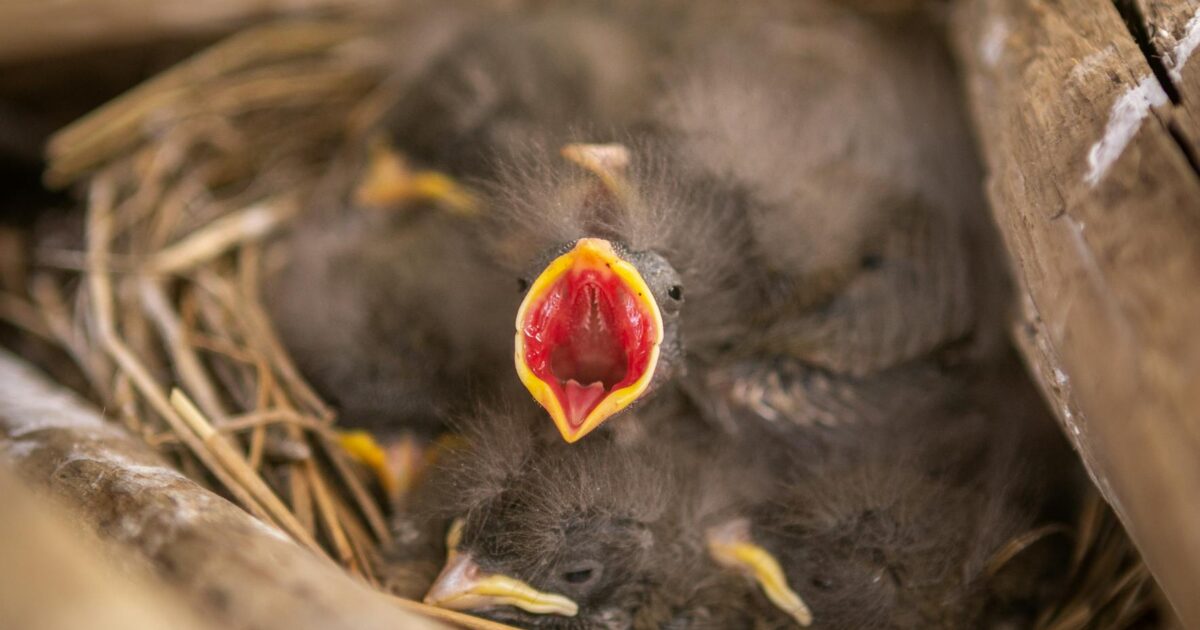
The method of feeding young birds is as critical as the food itself. Baby birds need to be fed frequently, often every 15-20 minutes from dawn to dusk, mimicking their parents’ tireless efforts. The food must be offered at the correct temperature and consistency—typically warm, not hot, and mashed to a suitable texture. The bird must be stimulated to gape (open its mouth), usually by gently tapping the beak or nest. Incorrect feeding can lead to aspiration, where food enters the lungs and causes pneumonia, or developmental issues like bone deformities due to nutrient imbalances or improper calcium-phosphorus ratios. This illustrates just how delicate and specialized the process is. Rehabilitators use specialized tools and techniques to ensure each feeding is successful and safe.
What NOT to Feed Young Birds
It is crucial to reiterate what should be avoided. As mentioned, milk is a definite no. Bread, crackers, and cereal offer minimal nutrition and can cause digestive upset or impaction. Avocados are toxic to birds. Anything salty, sugary, or heavily seasoned is also dangerous. Some common household foods, like chocolate, caffeine, and alcohol, are toxic. Even seemingly harmless items like peanut butter can be problematic; while high in protein, its sticky consistency can pose a choking hazard or block a bird’s airway if not properly diluted and mixed. Always err on the side of caution and consult a rehabilitator before offering anything not specifically recommended.
Common Foods for Young Wild Birds (and How They Are Prepared by Experts)
Professional wildlife rehabilitators prepare a variety of specific diets tailored to different species. For insectivores, this often involves a mix of high-quality, commercially prepared insectivore pellets (rehydrated), mixed with a variety of live or freeze-dried insects like mealworms, waxworms, crickets, and soldier fly larvae. These insects provide essential chitin, protein, and nutrients. For granivorous species, after their initial insect-dependent phase, a mixture of soaked seeds and grains, supplemented with vitamins and minerals, may be used. Omnivores receive a blend that might include specialized bird-rearing formulas, finely chopped fruits, vegetables, and insects. The key is balance and appropriate nutrient ratios, often guided by veterinary nutritionists. The use of starter crumb versus mini pellet for chicks, as discussed in Farmers Weekly (April 2026), highlights the ongoing research into optimal feed particle size and composition for different avian life stages.
The Role of Hydration
Proper hydration is as vital as nutrition. Young birds receive a significant amount of water from their food, especially insects, which have high moisture content. Rehabilitators use specialized techniques to ensure adequate intake, sometimes involving water-soaked foods or, in specific cases, carefully administered oral fluids. For the general public, the safest approach is to avoid offering water directly unless advised by a rehabilitator. Forcing water can easily lead to aspiration. If a bird is visibly dehydrated and professional help is delayed, a single drop of water carefully placed on the tip of the beak might be permissible, but this should be an absolute last resort.
Long-Term Health and Rehabilitation Goals
The ultimate goal of any intervention, whether emergency care or professional rehabilitation, is to return the bird to the wild healthy and capable of surviving independently. This involves not only providing the correct nutrition and hydration but also ensuring proper physical development, disease prevention, and behavioral conditioning. Rehabilitation centers work to mimic natural conditions as much as possible, gradually introducing birds to appropriate foods and environments. This process can take weeks or months, depending on the bird’s age and condition upon arrival. Successful rehabilitation means the bird can forage for itself, avoid predators, and contribute to its species’ population.
Frequently Asked Questions about Feeding Young Birds
Q1: What is the single most important thing to do if I find a young bird?
The most important action is to contact a licensed wildlife rehabilitator immediately. They have the expertise to determine if the bird truly needs assistance and what its specific dietary and care requirements are.
Q2: Can I feed a baby bird water from a dropper?
Only offer a single drop of water on the tip of the beak if the bird appears dehydrated and you cannot reach a rehabilitator immediately. Never force water down its throat, as this can lead to aspiration. Rehabilitators will manage hydration appropriately.
Q3: What are the dangers of feeding a baby bird bread?
Bread offers very little nutritional value for birds. It can absorb water and swell in their digestive system, leading to a feeling of fullness without providing necessary nutrients, potentially causing starvation. It can also lead to digestive blockages.
Q4: How often do baby birds need to be fed?
Baby birds, especially nestlings, require frequent feeding, often every 15-20 minutes from dawn until dusk. This mimics the constant foraging efforts of their parents in the wild.
Q5: Are there any common household foods that are safe for baby birds?
Generally, it is best to avoid most common household foods. If absolutely necessary as a temporary measure before professional help arrives, a tiny amount of crumbled, unseasoned hard-boiled egg yolk or moistened, unseasoned high-quality kibble are sometimes recommended by rehabilitators, but these are not ideal long-term solutions.
Conclusion
Caring for a young bird found in distress requires knowledge, caution, and a commitment to seeking expert help. While the instinct to intervene is commendable, providing incorrect food or using improper techniques can do more harm than good. Always prioritize contacting a licensed wildlife rehabilitator, as they possess the specialized knowledge for species-specific diets and care. For temporary emergency situations, use only the most basic, recommended stop-gap measures and avoid common pitfalls like milk or bread. By understanding the complexities of avian nutrition and respecting the expertise of rehabilitators, you contribute to the best possible chance of survival for these vulnerable creatures.
Sabrina
2 writes for OrevateAi with a focus on agriculture, ai ethics, ai news, ai tools, apparel & fashion. Articles are reviewed before publication for accuracy.