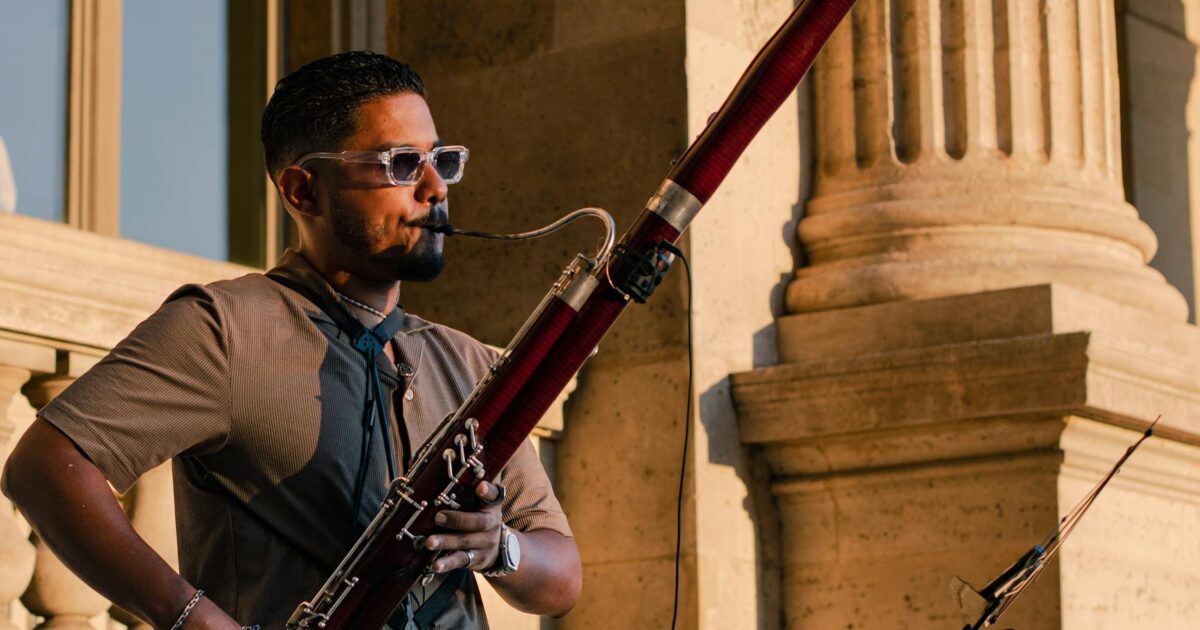
When you first hear its distinctive, rich tone, you might wonder, “What instrument is that?” Often mistaken for a larger oboe, the cor anglais is a beautifully resonant double-reed instrument that holds a special place in the orchestral and chamber music repertoire. While it shares its lineage with the oboe, the cor anglais possesses a unique character all its own. In this guide, we’ll explore the world of the cor anglais oboe, uncovering its history, its sound, how it differs from its smaller cousin, and practical tips for aspiring players.
I’ve spent years around orchestral musicians, and the cor anglais always stands out. Its voice is often described as yearning, introspective, and deeply expressive. It’s the sound you might associate with a particularly poignant moment in a symphony or a haunting solo in a film score. But what exactly makes this instrument so special?
Table of Contents
Cor Anglais vs. Oboe: Key Differences
A Brief History of the Cor Anglais Oboe
The Unique Sound of the Cor Anglais
Playing the Cor Anglais: Practical Tips
Cor Anglais Reeds and Maintenance
Conclusion: Embracing the Cor Anglais
What is a Cor Anglais?
The cor anglais, often called the English horn in North America, is a transposing woodwind instrument of the oboe family. Its name is a bit of a misnomer; it is not English in origin, nor is it a horn. It’s essentially a tenor oboe, pitched lower than the standard oboe. The “cor” likely refers to the curved shape of some early models, and “anglais” may have been a corruption of the French word “angle” (angled).
It’s pitched a perfect fifth lower than the oboe, meaning that when a player reads a C, the instrument sounds an F. This lower pitch contributes significantly to its characteristic dark, mellow, and resonant tone. Unlike the oboe, it features a bulbous bell and a metal crook (bocal) that holds the double reed.
Cor Anglais vs. Oboe: Key Differences
While they belong to the same family and share many similarities, the cor anglais and the oboe have distinct differences that impact their sound, playing technique, and musical roles.
The most obvious difference is size and pitch. The cor anglais is longer and therefore produces lower notes. Its primary key is F, a fifth below the oboe’s key of C. This means written notes for the cor anglais sound differently than written notes for the oboe. For instance, a written C on the cor anglais sounds an F, while a written C on the oboe sounds a C.
Visually, the cor anglais has a larger, bulbous bell (often described as pear-shaped or rounded) and uses a bent metal tube called a bocal to hold the reed. The oboe has a straight body and bell and the reed is directly inserted into the top of the instrument. The cor anglais reed is also typically larger and requires more air and embouchure support to play.
These physical differences translate directly into their sonic qualities. The oboe has a brighter, more piercing, and agile sound, often used for brilliant melodic lines. The cor anglais, conversely, offers a richer, darker, more mellow, and often more poignant or melancholic tone, lending itself to expressive solos and atmospheric passages.
Here’s a quick comparison:
| Feature | Cor Anglais (English Horn) | Oboe |
|---|---|---|
| Pitch | Perfect fifth lower than oboe (in F) | Standard pitch (in C) |
| Size | Larger, longer body | Smaller, shorter body |
| Bell Shape | Bulbous, rounded | Straight, conical |
| Reed Attachment | Metal bocal (crook) | Directly into instrument |
| Timbre | Dark, mellow, poignant, rich | Bright, penetrating, agile |
| Typical Role | Expressive solos, atmospheric color | Melodic lines, soloistic passages |
A Brief History of the Cor Anglais Oboe
The history of the cor anglais is intertwined with the evolution of the oboe. Its origins can be traced back to the Baroque period, around the late 17th or early 18th century. Early versions were often straight and made of wood, resembling the oboe but larger and pitched lower. The distinctive curved body and bulbous bell developed later, contributing to its unique timbre.
The instrument gained significant popularity in the 19th century, particularly with Romantic composers who were drawn to its expressive capabilities. Composers like Berlioz, Dvořák, and Tchaikovsky wrote memorable parts for the cor anglais, solidifying its place in the orchestral sound palette. Berlioz’s use of the cor anglais in his Symphonie fantastique, for instance, is iconic, conveying a sense of longing and melancholy.
The term “English horn” became prevalent in America, likely stemming from a mistranslation or misunderstanding of the French “cor angle” (angled horn), perhaps referring to its shape. Despite the name, its roots are firmly in continental Europe and the development of the oboe family.
Understanding this history helps appreciate why composers chose the cor anglais for specific emotional effects. It wasn’t just a bigger oboe; it was an instrument developed to evoke a particular mood and color within the ensemble.
The Unique Sound of the Cor Anglais
What truly sets the cor anglais apart is its sound. It’s often described as having a more “vocal” quality than the oboe. The lower register is particularly rich and resonant, capable of profound depth and warmth. The middle register maintains a lovely sweetness, while the upper register, though not as brilliant as the oboe’s, can be incredibly poignant and expressive.
This sound is a direct result of its physical characteristics: the longer bore, the larger reed, and the bulbous bell. These elements combine to produce a sound that is less focused and more diffused than the oboe, creating a softer, rounder tone. It’s an instrument that excels at conveying introspection, sadness, tenderness, and a certain noble gravitas.
Think of the famous solo in Dvořák’s Symphony No. 9, “From the New World.” That haunting melody is played on the cor anglais, perfectly capturing a sense of nostalgia and yearning. It’s a sound that can stop you in your tracks.
The cor anglais, with its distinctive melancholic tone, has been described as the voice of the soul in the orchestra. Its ability to convey deep emotion makes it indispensable for composers seeking to add a layer of profound feeling to their works. The instrument’s rich timbre is a testament to its unique construction and the expressive potential of the double-reed family.
Playing the Cor Anglais: Practical Tips
If you’re an oboist considering picking up the cor anglais, or a musician curious about its playing technique, here are some practical tips. The fundamental embouchure and fingering systems are similar to the oboe, but there are key adjustments to make.
Embouchure and Breath Support: Because the cor anglais reed is larger and the instrument is pitched lower, you’ll need more air and a slightly more relaxed, yet firm, embouchure. Don’t try to force the sound; focus on steady airflow and good reed vibration. Many players find they need to support the reed slightly more with their lower lip. Experiment to find what feels stable and allows for good tone production.
Intonation: Like all double-reed instruments, intonation can be a challenge. The cor anglais is particularly sensitive to air speed and embouchure adjustments. Practice long tones regularly, using a tuner, and pay close attention to how subtle changes in your playing affect the pitch. The bocal can also be adjusted slightly to help with tuning.
Fingerings: While many fingerings are the same as the oboe, there are differences, especially in the lower register and for certain chromatic notes. It’s essential to get a reliable fingering chart for the cor anglais. Some players find certain passages easier on the cor anglais due to its slightly different keywork or bore characteristics, while others present unique challenges.
Repertoire: Explore the fantastic repertoire written for the cor anglais. Beyond orchestral excerpts, there are beautiful concertos, sonatas, and chamber works. Learning these pieces will not only improve your playing but also deepen your appreciation for the instrument.
A common mistake I see new cor anglais players make is trying to play it exactly like an oboe, just with more force. This usually leads to a pinched sound and intonation problems. The cor anglais requires a different approach to airflow and embouchure to truly unlock its rich, singing tone.
Cor Anglais Reeds and Maintenance
The reed is the heart of any double-reed instrument, and for the cor anglais, it’s a critical component. Cor anglais reeds are larger and often made from a thicker cane than oboe reeds. They require careful handling and preparation.
Making vs. Buying Reeds: Many advanced players make their own reeds to perfectly suit their instrument and playing style. However, this is a complex skill. For most players, especially beginners, purchasing reeds from reputable makers is the most practical approach. Look for reeds specifically designed for cor anglais.
Reed Care: Reeds need to be soaked in water before playing to become pliable. Store them properly in a reed case to prevent damage. Be gentle when handling them. A damaged or poorly made reed can make playing the instrument incredibly difficult, if not impossible.
Instrument Care: After playing, always swab out the instrument, paying special attention to the bocal and the inside of the bell. Ensure the keywork is clean and functioning. Regular maintenance by a qualified woodwind technician is crucial for keeping your cor anglais in good playing condition.
Frequently Asked Questions
Is the cor anglais hard to play?
The cor anglais presents challenges similar to the oboe, including embouchure control, breath support, and reed management. Its larger size and reed require significant air and practice. However, for experienced oboists, the transition is often smoother than for a complete beginner.
What is the difference in sound between a cor anglais and an oboe?
The cor anglais has a darker, richer, more mellow, and poignant sound due to its larger size and lower pitch. The oboe has a brighter, more penetrating, and agile tone, often described as more piercing.
Why is it called an English horn if it’s not English?
The name is likely a corruption of the French term “cor angle,” meaning “angled horn,” referring to the shape of early instruments. It’s not an English instrument, nor is it a horn; it’s a member of the oboe family.
What are some famous pieces featuring the cor anglais?
Iconic examples include the opening solo in Dvořák’s Symphony No. 9 (“From the New World”), the “Witch’s Dance” in the finale of Berlioz’s Symphonie fantastique, and passages in Tchaikovsky’s Swan Lake and The Nutcracker ballets.
Can a beginner learn the cor anglais?
While technically possible, it’s generally recommended that beginners start with the standard oboe. This builds a foundational understanding of double-reed technique. Transitioning to the cor anglais is often more successful once a solid oboe technique is established.
Conclusion: Embracing the Cor Anglais
The cor anglais oboe is a truly special instrument, offering a unique voice that has captivated audiences and composers for centuries. Its rich, expressive tone provides a depth and emotional resonance that few other instruments can match. Whether you’re an experienced oboist looking to expand your repertoire or a curious listener drawn to its haunting melodies, understanding the cor anglais enriches your appreciation of the woodwind family and orchestral music.
If you’re considering playing the cor anglais, remember that patience, dedicated practice, and attention to reed quality are key. Embrace the challenges, enjoy the beautiful sound, and explore the wonderful music written for this magnificent instrument. The journey of mastering the cor anglais oboe is a rewarding one, filled with expressive possibilities.


Sabrina
Expert contributor to OrevateAI. Specialises in making complex AI concepts clear and accessible.