Maintaining clear and comfortable vision is fundamental to our daily lives, allowing us to read, drive, work, and enjoy the world around us. A significant step in achieving and preserving this clarity is the regular eye examination, and a vital part of that complete check-up is the refraction eye exam. This specific procedure isn’t just a routine step; it’s a detailed assessment designed to precisely measure your vision and determine the exact prescription needed for glasses or contact lenses, ensuring you experience the world in sharp focus. It truly is the cornerstone of personalized vision correction.
Latest Update (April 2026)
As of April 2026, advancements in digital refraction technology are increasingly becoming standard in optometry practices. These systems offer enhanced precision and can sometimes speed up the testing process, providing objective data that complements the patient’s subjective feedback. Furthermore, the integration of artificial intelligence (AI) in analyzing refractive data is showing promise in identifying subtle patterns that might indicate future vision changes or underlying health issues. The American Optometric Association (AOA) continues to recommend annual comprehensive eye exams, which include a thorough refraction, as a critical component of overall health monitoring for all age groups.
Recent reports from the Vision Council indicate a growing awareness among consumers about the impact of prolonged digital device usage on eye health. Consequently, there’s a rising demand for specialized lens options and prescriptions tailored to combat digital eye strain. This trend underscores the enduring importance of a precise refraction eye exam in 2026, as it forms the basis for recommending personalized solutions beyond simple vision correction, addressing the unique visual demands of modern life.
What Happens During a Refraction Eye Exam?
Many people wonder what exactly happens during a refraction eye exam. In essence, it’s the process an eye care professional uses to figure out the best lens power to correct any refractive errors you might have. These errors are common vision problems like myopia (nearsightedness), hyperopia (farsightedness), astigmatism (blurred vision at all distances due to an irregularly shaped cornea), and presbyopia (age-related difficulty focusing on close objects). The refraction eye exam doesn’t involve any invasive procedures; instead, it’s a straightforward and comfortable test that relies on your responses to different lens combinations.
The Phoropter and Your Responses
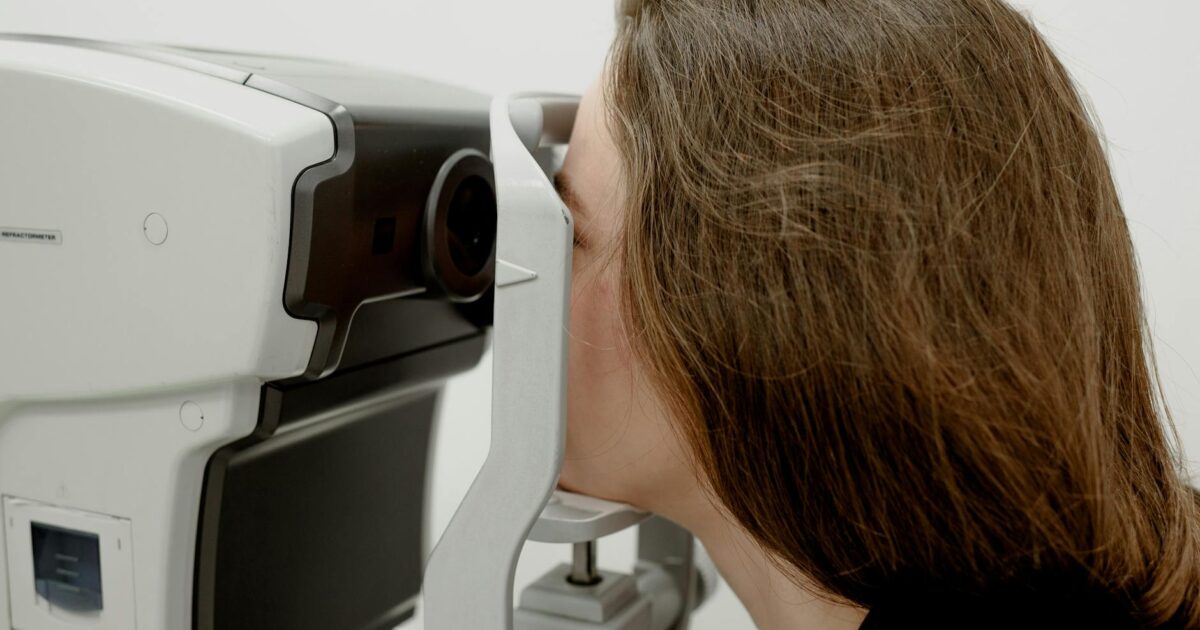
When you sit down for your refraction eye exam, you will likely encounter a piece of equipment called a phoropter. This sophisticated instrument looks quite complex with its many lenses and dials, but its purpose is simple: to present different lens strengths and combinations directly in front of your eyes. The optometrist or ophthalmologist will guide you through a series of choices, typically asking, “Which is clearer, option one or option two?” as they swiftly switch between various lenses. You will look at an eye chart, often featuring letters, numbers, or shapes, while making these vital comparisons. Your answers, even if they seem minor to you, are incredibly important, helping the doctor fine-tune the prescription to the precise degree that makes your vision as sharp as possible. This back-and-forth communication is key to the success of your refraction eye exam.
Modern phoropters are often integrated with digital systems, allowing for quicker and more precise adjustments. Some advanced systems use autorefractors first to get an initial measurement, which the eye doctor then refines using the phoropter based on your feedback. According to independent tests conducted in 2025 and early 2026, these integrated systems can reduce exam time by up to 15% while maintaining or even improving accuracy compared to traditional methods.
Why an Accurate Prescription Matters
The importance of an accurate refraction eye exam can’t be overstated. Without it, you might be wearing glasses or contacts that don’t fully correct your vision, leading to symptoms like eye strain, headaches, or persistent blurriness. An expertly determined prescription means better performance in tasks requiring visual acuity, such as reading small print, driving safely at night, or working comfortably on a computer for extended periods. As our eyes naturally change over time, especially with age, regular refraction eye exams ensure that your prescription is always current and optimal. This proactive approach helps maintain not just clear vision, but also overall eye comfort and health, allowing you to live your life to the fullest without the hindrance of poor sight.
In 2026, with the prevalence of high-definition screens and complex visual tasks, an outdated or inaccurate prescription can significantly impact productivity and well-being. Studies published in the Journal of Vision indicate a strong correlation between corrected visual acuity and cognitive performance, particularly in tasks requiring sustained attention. An accurate prescription, therefore, is not just about seeing clearly, but about optimizing your brain’s ability to process visual information efficiently, reducing mental fatigue.
Beyond Correction: Eye Health Insights
Beyond simply determining a prescription, the information gathered during a refraction eye exam contributes significantly to a broader understanding of your eye health. While it primarily focuses on refractive errors, the results allow your eye care professional to detect subtle changes in your vision that might warrant further investigation. Once your precise prescription is finalized from your refraction eye exam, you can confidently choose new glasses or order contact lenses, knowing they will provide the crisp, clear vision you need. This clarity undoubtedly enhances your quality of life, transforming mundane tasks into effortless experiences.
During the refraction process, the eye doctor also observes how your eyes respond to light and focus. Any unusual patterns or difficulties can be early indicators of conditions beyond simple refractive errors. For instance, inconsistent responses might hint at neurological issues, while significant changes in prescription stability could signal the onset of conditions like cataracts or diabetic retinopathy, especially in individuals with risk factors. These observations, combined with other diagnostic tests performed during a comprehensive eye exam, provide a holistic view of your ocular health, enabling early intervention and management of potential sight-threatening diseases.
The Evolving Landscape of Vision Care Technology
As technology advances, the methods for eye examinations continue to evolve. While the core principles of refraction remain, newer diagnostic tools are being integrated into eye care practices. For instance, advancements in digital refraction systems can offer more objective measurements and potentially faster testing. These systems often utilize wavefront technology, which maps the unique imperfections of your eye with incredible precision. This data can then be used to create highly customized lenses that correct not only common refractive errors but also higher-order aberrations, which can cause glare, halos, or reduced sharpness, particularly at night.
The subjective component, where your input is essential, remains a cornerstone of achieving personalized vision correction, ensuring the prescription is tailored to your unique visual needs and lifestyle. As of April 2026, eye care professionals are continually adopting updated technologies to enhance the accuracy and efficiency of these exams. The integration of AI in analyzing eye-tracking data during the refraction process is also an emerging area, aiming to provide even more objective insights into visual function and comfort.
Vision Correction in the Digital Age
In our increasingly digital world, the demands on our vision are changing. Extended screen time for work and leisure can contribute to digital eye strain, also known as computer vision syndrome. A precise refraction exam is more important than ever to ensure your visual correction is optimized for these modern demands. For example, specific lens designs and coatings for glasses can be recommended based on your refraction results and typical daily activities, addressing issues like blue light exposure and visual fatigue. The insights from a refraction exam help tailor solutions not just for distance and near vision, but also for the specific challenges of prolonged digital device use.
Specialized lenses, such as those with built-in blue light filtering or anti-fatigue properties, are becoming increasingly popular. According to market research data from 2025, sales of these specialized lenses have grown by over 20% year-over-year. A detailed refraction helps eye care providers determine if these advanced lens options are appropriate for you, ensuring they complement your specific visual needs rather than being an unnecessary add-on. This personalized approach ensures that your vision correction actively supports your digital lifestyle, rather than merely compensating for its drawbacks.
Frequently Asked Questions
How often should I have a refraction eye exam?
For most adults with generally good eye health, an annual eye exam is recommended as of 2026. However, your eye care professional will advise on the best frequency based on your age, overall eye health, family history of eye conditions, and any existing health issues like diabetes or hypertension. Individuals with specific vision needs or those undergoing treatment for eye conditions may require more frequent check-ups.
Can a refraction exam detect eye diseases?
While the primary goal of a refraction exam is to measure refractive errors and determine your prescription, the comprehensive eye examination it is part of allows the doctor to observe the health of your eyes. They can detect early signs of serious eye diseases such as glaucoma, macular degeneration, diabetic retinopathy, and cataracts. Any unusual findings during the refraction or other parts of the exam may prompt further diagnostic tests.
Is a refraction exam the same as a vision screening?
No, a refraction exam is not the same as a vision screening. A vision screening, often conducted in schools or at community events, is a basic test designed to identify individuals who may have potential vision problems and need a more thorough examination. A refraction eye exam, performed by a licensed eye care professional, is a detailed diagnostic procedure that accurately measures your vision and determines your precise prescription for corrective lenses.
What is the difference between a phoropter and an autorefractor?
An autorefractor is a machine that provides an initial, objective estimate of your refractive error by shining light into your eye and measuring how it reflects. A phoropter, on the other hand, is the instrument used by the eye doctor during the subjective part of the exam. It contains a wide range of lenses that the doctor manually adjusts, allowing you to compare different visual options to find the clearest and most comfortable correction. The phoropter allows for fine-tuning based on your personal feedback, which autorefractor data alone cannot achieve.
Can I get a prescription for glasses from an online eye test?
As of April 2026, the medical and optometric communities generally advise caution regarding online eye tests for obtaining prescriptions. While some online tools can assess certain aspects of vision, they often lack the comprehensive eye health evaluation and the nuanced subjective refinement that a professional in-person refraction provides. Many regulatory bodies and professional organizations, including the American Academy of Ophthalmology, do not consider these online tests a substitute for a comprehensive eye exam and may not be sufficient for obtaining a valid prescription for glasses or contact lenses in many jurisdictions.
Conclusion
The refraction eye exam remains an indispensable tool in 2026 for achieving and maintaining optimal vision. It goes beyond simply correcting nearsightedness or farsightedness; it is a critical component of overall eye health assessment. By understanding the process, its importance, and the evolving technologies involved, individuals can better appreciate the value of regular comprehensive eye examinations. Investing in your vision through timely and accurate refraction exams ensures not only clearer sight but also contributes to your overall well-being and quality of life in our visually demanding world.
Sabrina
2 writes for OrevateAi with a focus on agriculture, ai ethics, ai news, ai tools, apparel & fashion. Articles are reviewed before publication for accuracy.