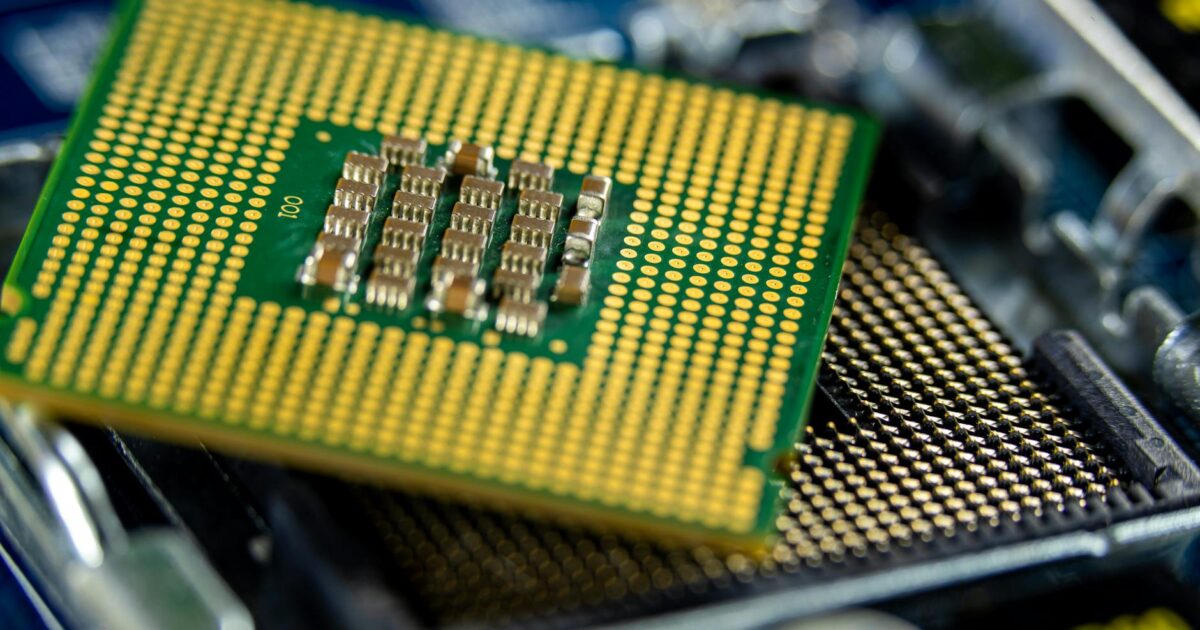
Have you ever looked at a shiny computer chip or a solar panel and wondered about the materials that make them work? One element, in particular, often sparks curiosity: silicon. It’s everywhere, from the sand on our beaches to the most advanced electronics, yet its true classification frequently stumps people. The question, “is silicon a metal,” is a common one, and the answer is more nuanced than a simple yes or no. Let’s explore the fascinating world of silicon and uncover its true identity.
Last updated: April 26, 2026
At first glance, silicon can be quite deceiving. It often appears with a metallic luster, resembling many true metals. However, the properties of an element are what truly define its category on the periodic table. As we examine its characteristics, we’ll discover why silicon occupies a unique and incredibly important place, bridging the gap between two major classifications.
Unraveling the Mystery: Is Silicon a Metal?
To properly answer “is silicon a metal,” we first need to understand what defines a metal in the scientific world. Metals are a large group of elements known for a specific set of physical and chemical properties. Think about elements like copper, iron, or gold. They share several key traits that make them indispensable in our daily lives.
What Defines a Metal?
- Electrical Conductivity: Metals are excellent conductors of electricity. Their loosely held valence electrons can move freely, forming a “sea of electrons” that allows current to flow easily.
- Thermal Conductivity: Similarly, metals are great at conducting heat. This is why metal pots and pans are so effective for cooking.
- Luster: Most metals have a characteristic shiny, reflective surface. This “metallic luster” is often what makes them visually appealing.
- Malleability: Metals can be hammered or pressed into thin sheets without breaking. Aluminum foil is a perfect example of this property.
- Ductility: Metals can be drawn out into thin wires. Think of copper wiring in your home.
- High Melting Points: Generally, metals require a lot of energy to melt, indicating strong atomic bonds.
- Chemical Reactivity: Metals tend to lose electrons in chemical reactions, forming positive ions (cations).
Now, with these metallic benchmarks in mind, let’s examine silicon’s properties to see where it fits, or perhaps, where it doesn’t.
Examining Silicon’s Properties: The Evidence
When we put silicon under the microscope, its properties reveal a complex picture that doesn’t fully align with the definition of a metal. This is crucial for understanding why the answer to “is silicon a metal” isn’t a simple yes.
Electrical Conductivity: The Semiconductor Key
One of the most defining characteristics of metals is their excellent electrical conductivity. Here, silicon diverges significantly. While it can conduct electricity, it’s nowhere near as efficient as true metals like copper or silver. In fact, silicon’s conductivity lies somewhere between that of conductors (metals) and insulators (nonmetals). This intermediate conductivity is precisely why silicon is classified as a semiconductor. Its ability to control the flow of electricity is what makes it invaluable in modern electronics. As of April 2026, advancements in silicon-based semiconductors continue to push the boundaries of computing power and energy efficiency in devices ranging from smartphones to advanced AI hardware. For instance, Intel announced in late 2025 that its 18A process node had entered high-volume manufacturing, a significant development in silicon chip production, as reported by FinancialContent on December 29, 2025.
Thermal Conductivity: Moderate Performance
Silicon does conduct heat, but again, not as efficiently as most metals. It’s a decent thermal conductor compared to nonmetals, but it doesn’t match the superior heat transfer capabilities of, say, aluminum or copper. This property contributes to its use in certain thermal management applications, but it doesn’t define it as a metal.
Luster: The Source of Confusion
Here’s where the confusion often originates. Crystalline silicon, especially in its purified form, exhibits a distinct metallic luster. It’s shiny and reflective, much like a polished piece of metal. This visual characteristic is often the first thing people notice, leading them to assume that silicon is a metal.
Malleability and Ductility: Brittle by Nature
Unlike metals, which are malleable and ductile, silicon is quite brittle. If you were to hit a piece of solid silicon with a hammer, it wouldn’t flatten or stretch; it would shatter into many pieces. This behavior is characteristic of nonmetals and contrasts sharply with the deformability of true metals. This is a very strong indicator that silicon is not a metal in the traditional sense.
Chemical Bonding: Covalent Connections
In terms of chemical behavior, metals typically lose electrons to form ionic bonds. Silicon, on the other hand, prefers to share electrons with other atoms, forming strong covalent bonds. It has four valence electrons, allowing it to form stable structures by sharing electrons with up to four neighboring atoms. This covalent bonding is a hallmark of nonmetals and metalloids.
Introducing the Metalloids: Silicon’s True Home
Given its mixed bag of properties – some metallic, some nonmetallic – where exactly does silicon belong? The answer lies in a special category of elements known as metalloids. Metalloids are elements that possess properties intermediate between those of metals and nonmetals.
What Defines a Metalloid?
Metalloids sit along the zigzag line on the periodic table, separating the metals from the nonmetals. They exhibit a blend of characteristics:
- They often have a metallic luster but are brittle.
- They are semiconductors, meaning their electrical conductivity is between that of metals and nonmetals.
- Their chemical reactivity is also intermediate, showing characteristics of both metals and nonmetals depending on the reaction.
- Common metalloids include silicon, germanium, arsenic, antimony, and tellurium.
Silicon’s position on the periodic table, in Group 14, further solidifies its classification as a metalloid. While it shares the group with metals like lead and tin, and nonmetals like carbon, silicon’s unique electron configuration and resulting properties place it squarely in the metalloid category.
Silicon’s Crucial Role in Technology
The classification of silicon as a semiconductor is not merely an academic distinction; it’s the very foundation of the digital age. Without silicon’s unique properties, the microprocessors, memory chips, and sensors that power our world would not exist in their current form. As of April 2026, the demand for high-performance silicon continues to grow, driven by artificial intelligence, 5G/6G communication networks, and the expanding Internet of Things (IoT).
The Heart of the Microchip
The ability of silicon to act as a semiconductor is its most celebrated attribute. By carefully introducing impurities (doping) with elements like phosphorus or boron, engineers can precisely control silicon’s electrical conductivity. This control allows for the creation of transistors, the fundamental building blocks of all modern electronic devices. Transistors act as tiny switches, turning electrical signals on and off, which is the basis of binary code (0s and 1s) that computers use to process information. The ongoing miniaturization and increased complexity of integrated circuits (ICs) are a testament to the remarkable engineering possibilities enabled by silicon. As of early 2026, leading foundries like TSMC and Samsung are pushing the envelope with advanced process nodes, enabling smaller, faster, and more power-efficient chips for everything from consumer electronics to high-performance computing.
Powering Renewable Energy
Beyond computing, silicon is also indispensable in the renewable energy sector, particularly in solar panels. Photovoltaic cells, the components that convert sunlight into electricity, are predominantly made from silicon. When photons from sunlight strike a silicon solar cell, they excite electrons, generating an electric current. The efficiency and cost-effectiveness of silicon-based solar technology have made solar power one of the fastest-growing energy sources globally. Reports indicate that global solar installations reached record levels in 2025, with silicon PV technology playing a central role. As of April 2026, research continues into improving silicon solar cell efficiency and developing new manufacturing techniques to further reduce costs and increase adoption.
Other Applications
Silicon’s utility extends to numerous other fields. It’s a key component in:
- Glass: Silicon dioxide (silica), a compound of silicon and oxygen, is the primary component of glass.
- Ceramics: Many advanced ceramics used in high-temperature applications and electronics contain silicon compounds.
- Construction: Silicones, a versatile family of synthetic polymers containing silicon, are used in sealants, adhesives, and insulation.
- Medical Devices: Biocompatible silicones are used in implants, prosthetics, and drug delivery systems.
- Alloys: Silicon is added to aluminum alloys to improve their castability and strength, widely used in the automotive industry.
The Manufacturing Process: From Sand to Semiconductor
Producing the ultra-pure silicon required for semiconductor manufacturing is a complex and energy-intensive process. It typically begins with quartz (silicon dioxide), which is heated in an electric arc furnace with carbon to produce metallurgical-grade silicon (MGS). MGS, around 98-99% pure, is not pure enough for electronics. To achieve the required purity (often exceeding 99.9999%), MGS undergoes further chemical purification. A common method involves converting MGS into a volatile silicon compound, such as trichlorosilane (SiHCl3), which is then distilled to remove impurities. Finally, the purified trichlorosilane is decomposed at high temperatures, often using the Siemens process, to deposit ultra-pure polycrystalline silicon. This material is then melted and grown into large single crystals (ingots) using methods like the Czochralski process, which are then sliced into wafers for chip fabrication.
Advancements in Purity and Manufacturing
The quest for ever-higher purity and more efficient manufacturing methods is ongoing. Experts in materials science and chemical engineering are constantly refining purification techniques and exploring novel deposition methods. As of April 2026, research is exploring advanced plasma-based deposition and alternative purification pathways to reduce energy consumption and environmental impact. The development of thinner, more flexible silicon wafers is also a key area of innovation, driven by the demand for advanced displays and wearable electronics.
Silicon vs. Other Elements: A Comparative Look
To truly understand silicon’s classification, comparing it with its periodic table neighbors is insightful.
Silicon vs. Carbon (Nonmetal)
Carbon, directly above silicon in Group 14, is a classic nonmetal. It forms the basis of organic chemistry, creating long chains and complex structures through covalent bonding. Carbon is an insulator in its common forms (like diamond or graphite, though graphite has some conductivity). Silicon shares carbon’s ability to form four covalent bonds but lacks carbon’s versatility in forming complex organic molecules. Its conductivity, as discussed, is semiconducting, not insulating.
Silicon vs. Germanium (Metalloid)
Germanium, directly below silicon in Group 14, is silicon’s closest chemical cousin and is also classified as a metalloid. For many years, germanium was used in early transistors. However, silicon generally offers better semiconducting properties at higher temperatures and is significantly more abundant and cheaper to produce. Modern electronics overwhelmingly favor silicon, though germanium finds niche applications, particularly in certain high-speed transistors and infrared optics.
Silicon vs. Aluminum (Metal)
Aluminum, a true metal, is to the left of silicon in the periodic table. It readily loses its three valence electrons to form positive ions, exhibiting typical metallic properties like high conductivity, malleability, and ductility. While aluminum is crucial for structural components and electrical wiring, it cannot function as a semiconductor.
Latest Update (April 2026)
The semiconductor industry, heavily reliant on silicon, continues its rapid evolution. As of April 2026, major research efforts are focused on enhancing silicon’s capabilities beyond traditional semiconductor applications. This includes exploring silicon photonics, which uses silicon to guide light signals, potentially revolutionizing high-speed data transmission. Furthermore, advancements in extreme ultraviolet (EUV) lithography are enabling the creation of even smaller and more powerful chips, with multiple companies investing heavily in next-generation EUV capabilities. The push for sustainable manufacturing practices is also gaining momentum, with foundries exploring ways to reduce water and energy consumption in silicon wafer production and chip fabrication. The global supply chain for silicon wafers remains a critical focus, with ongoing efforts to ensure stability and resilience in production, as reported by industry analysts in early 2026.
Frequently Asked Questions
Is silicon a type of metal?
No, silicon is not a metal. It is classified as a metalloid, possessing properties intermediate between metals and nonmetals. While it has a metallic luster and can conduct electricity, it is brittle and functions as a semiconductor, unlike true metals which are highly conductive, malleable, and ductile.
Why does silicon look like a metal?
Silicon, particularly in its crystalline form, has a shiny, reflective surface that resembles the metallic luster of true metals. This visual similarity is a primary reason for the common confusion about its classification, but it is not a defining characteristic of a metal.
What makes silicon a semiconductor?
Silicon is a semiconductor because its electrical conductivity falls between that of conductors (metals) and insulators (nonmetals). Crucially, this conductivity can be precisely controlled by introducing impurities (doping), allowing it to be used in transistors and integrated circuits to manage electrical signals.
Is silicon used in everyday electronics?
Yes, silicon is fundamental to virtually all everyday electronics. It is the primary material used in microprocessors, memory chips, transistors, and solar cells that power smartphones, computers, televisions, and countless other devices.
What are the main differences between silicon and carbon?
Both silicon and carbon are in Group 14 of the periodic table and form four covalent bonds. However, carbon is a nonmetal that forms the basis of organic chemistry and is typically an insulator. Silicon is a metalloid and a semiconductor, making it ideal for electronic applications. Carbon also exhibits greater versatility in forming complex molecular structures.
Conclusion
So, is silicon a metal? The definitive answer, as of April 2026, is no. Silicon is a metalloid, a unique element that bridges the gap between metals and nonmetals. Its distinctive properties—particularly its semiconducting nature, combined with a metallic luster, moderate thermal conductivity, and brittle structure—define its place on the periodic table and in our technological world. From the microprocessors in our computers to the solar panels generating clean energy, silicon’s semiconducting capabilities are indispensable. Understanding silicon’s classification is key to appreciating the ingenuity behind the electronic devices and sustainable technologies that shape our modern lives.
Sabrina
2 writes for OrevateAi with a focus on agriculture, ai ethics, ai news, ai tools, apparel & fashion. Articles are reviewed before publication for accuracy.