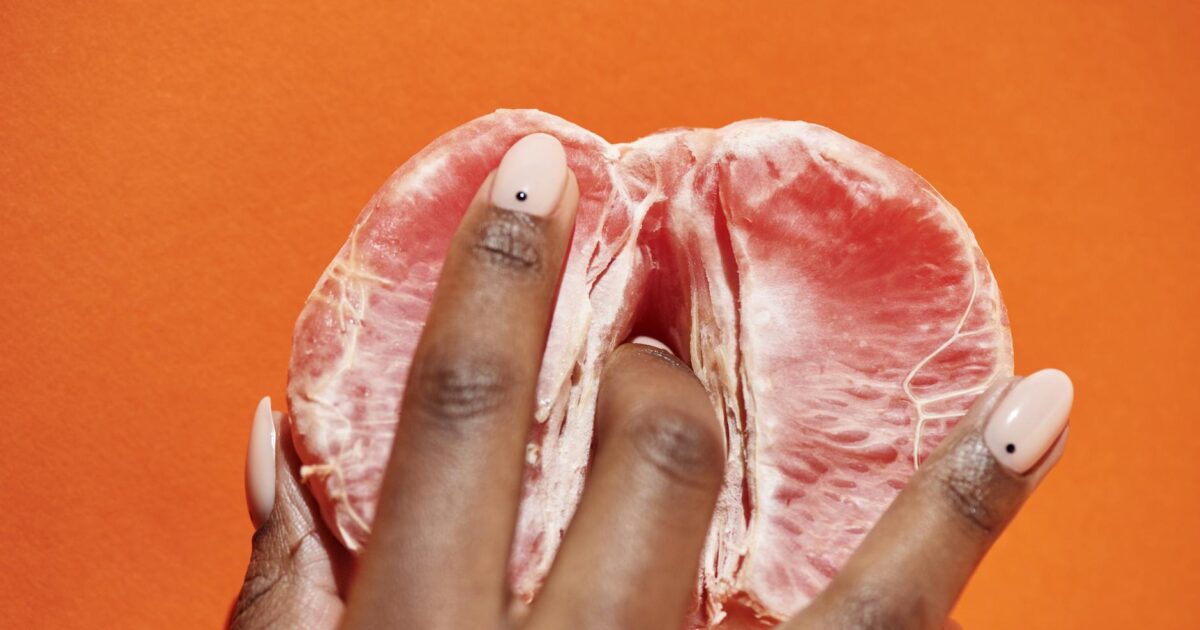
The terms “innies” and “outies” vaginas are commonly used, but they often oversimplify a wonderfully diverse reality. For those who’ve moved past the basics and are seeking a more nuanced understanding of vulvar appearance, this deep dive is for you. We’re going beyond the surface to explore the intricate anatomy, the factors influencing variation, and why embracing this diversity is key to body acceptance.
My journey in sexual health education has shown me how much misinformation and anxiety surrounds visible anatomy. Many people, myself included early on, felt a pressure to conform to a singular ideal. But the truth about innies vs outies vaginas is far more complex and beautiful.
Let’s set the record straight: there isn’t a strict medical definition for “innie” or “outie” when referring to the vulva. These are colloquial terms used to describe the appearance of the labia majora (the outer lips) and how the labia minora (the inner lips) are situated. What one person calls an “innie” might be considered typical for another, and vice versa. The goal here is not to label, but to understand the incredible range of human anatomy.
Table of Contents
Understanding the Terms: Beyond “Innies” and “Outies”
Anatomy Deep Dive: Labia Majora, Minora, and the Clitoral Hood
Factors Influencing Appearance: Genetics, Hormones, and More
Myth-Busting “Normalcy”: What Your Vulva Might Look Like
The Self-Acceptance Journey: Embracing Your Unique Vulva
Expert Advice on Vulvar Health and Appearance
Frequently Asked Questions
Conclusion
Understanding the Terms: Beyond “Innies” and “Outies”
When people discuss “innies vs outies vaginas,” they are typically referring to the visibility of the labia minora (inner lips) in relation to the labia majora (outer lips). An “outie” appearance is often described when the labia minora protrude noticeably beyond the labia majora. Conversely, an “innie” description is used when the labia minora are tucked within or are less visible than the labia majora.
However, this binary is far too simplistic. The spectrum of vulvar appearance is vast. Some individuals have labia minora that are symmetrical, while others have asymmetrical inner lips. Some may have very prominent inner lips that extend significantly, while others have very small or tucked-away inner lips. The labia majora also vary in fullness and shape.
My experience teaching anatomy confirms that what is commonly depicted in media or even in some educational materials often represents only a narrow sliver of what is genetically possible and anatomically sound.
Anatomy Deep Dive: Labia Majora, Minora, and the Clitoral Hood
To truly grasp the “innies vs outies vaginas” concept, we must look at the individual components of the vulva.
Labia Majora: These are the outer folds of skin, typically more fleshy and covered with pubic hair after puberty. They vary greatly in size, shape, and fullness, contributing to the overall frame of the vulva. They can be thin and flat, or plump and prominent.
Labia Minora: Located inside the labia majora, these are thinner, more delicate folds of skin. They surround the vaginal opening and the urethra. Their size, color, and texture are incredibly diverse. They can be short and smooth, long and rippled, thin, thick, or asymmetrical. It’s the relative position and prominence of the labia minora compared to the labia majora that often leads to the “innie” or “outie” descriptions.
Clitoral Hood: This is a fold of skin that protects the clitoris. It’s formed from the anterior junction of the labia minora. The size and coverage of the clitoral hood also vary, and it can sometimes obscure or partially cover the clitoral glans.
When discussing “innies vs outies,” we’re primarily talking about how the labia minora interact with the labia majora. If the labia minora extend beyond the labia majora, it’s often labeled an “outie.” If they are contained within, it’s an “innie.” But this is a spectrum, not a binary.
Factors Influencing Appearance: Genetics, Hormones, and More
The unique appearance of every vulva is a result of a complex interplay of factors, none of which are indicative of health or function.
Genetics: Like eye color or height, the shape, size, and proportion of your labia are largely determined by your genetic makeup. You inherit these traits from your parents, leading to the vast diversity we see.
Hormones: Hormonal fluctuations throughout life, particularly during puberty, pregnancy, and menopause, can influence the size and appearance of the labia. Puberty is when the labia majora and minora develop and grow, and their final form is a result of hormonal influences during this critical period.
Age: As we age, skin elasticity changes, which can subtly alter the appearance of the vulva over time.
Weight Fluctuations: Changes in body weight can affect the fullness of the labia majora.
It’s crucial to understand that none of these factors make one appearance “better” or “more normal” than another. They simply contribute to the individual variations that make each person’s anatomy unique.
Myth-Busting “Normalcy”: What Your Vulva Might Look Like
One of the biggest challenges people face is comparing their bodies to unrealistic or narrow depictions of “normal.” The internet is rife with images that don’t represent the full spectrum of vulvar anatomy. In reality, “normal” is a very wide umbrella.
Consider this: A study published in the Journal of Plastic and Reconstructive Surgery in 2004 analyzed images of labia minora from women aged 18 to 38. It found that the labia minora varied significantly in size and shape, with many women having labia minora that extended beyond the labia majora. Specifically, the study noted that the average length of the labia minora was 4.1 cm, but ranged from 1.5 cm to 7 cm. This clearly demonstrates that prominent labia minora are entirely within the range of typical anatomy.
“The perceived ‘norm’ for vulvar appearance is often based on a limited range of representations, leading to unnecessary anxiety about natural anatomical variations.”
Based on findings in anatomical studies on vulvar diversity.
Many individuals who identify their vulva as an “innie” might have labia minora that are short, thin, or deeply tucked. Those who identify as “outies” might have labia minora that are long, full, or extend significantly beyond the labia majora. Both are completely normal and healthy variations. The common mistake people make is assuming their anatomy is “wrong” because it doesn’t match a singular image they’ve seen.
The Self-Acceptance Journey: Embracing Your Unique Vulva
The conversation around “innies vs outies vaginas” often leads to questions about self-esteem and body image. For years, I’ve worked with individuals struggling with how their vulva looks, often fueled by comparisons and societal pressures.
The journey to self-acceptance is ongoing for many. It involves unlearning the idea that there’s a single “correct” way for a vulva to look. My personal experience with body image has taught me that true confidence comes from understanding and appreciating my body for what it does, not just how it appears.
Here’s a practical approach to fostering acceptance:
- Educate Yourself: Understanding the anatomy, as we’re doing now, demystifies the variations and normalizes diversity.
- Mindful Mirror Time: Spend time getting to know your own body without judgment. Notice the details, the textures, the colors.
- Challenge Negative Self-Talk: When critical thoughts arise, pause and counter them with factual information about anatomical variation.
- Seek Positive Representations: Follow accounts or resources that showcase diverse body types and vulvar appearances.
- Focus on Sensation and Pleasure: Shift focus from appearance to how your body feels and the pleasure it can experience.
Ultimately, the goal isn’t to fit into a category of “innie” or “outie,” but to feel comfortable and confident in your own skin, recognizing that your anatomy is perfectly suited for you.
Expert Advice on Vulvar Health and Appearance
As a health educator, I often advise people to approach their vulvar health with a holistic perspective. Appearance is just one facet.
When I first started my career, the prevailing narrative around vulvar appearance was much more restrictive. Now, thankfully, there’s a growing movement towards celebrating diversity. However, it’s important to distinguish between natural variation and potential medical concerns.
For those considering cosmetic procedures like labiaplasty, which often stems from anxieties about “innie” vs “outie” appearances, I always recommend a thorough consultation with a qualified medical professional. They can discuss the risks, benefits, and alternatives. Remember, many procedures are elective and address aesthetic concerns rather than medical necessity.
It’s essential to remember that the NHS, a leading health authority, emphasizes that the appearance of the vulva varies greatly and that there is no single “normal” look. They advise seeking medical advice if there are concerns about pain, itching, or discharge, rather than solely focusing on cosmetic appearance.
The NHS website provides comprehensive, evidence-based information on vulvar health, reinforcing the message of natural diversity and highlighting when to seek professional help.
Frequently Asked Questions
What is the most common type of vulva appearance for “innies vs outies vaginas”?
There isn’t one “most common” type, as “innies vs outies vaginas” describes a spectrum. Both prominent labia minora (outies) and less visible labia minora (innies) are entirely normal variations, with many individuals falling somewhere in between or having asymmetrical features.
Can “innies vs outies vaginas” affect sexual function or pleasure?
Generally, the visual appearance described by “innies vs outies vaginas” does not impact sexual function or pleasure. The clitoris, a primary source of sexual sensation, is well-protected in various vulvar configurations, and sensitivity is individual.
Is it normal for one labia minora to be larger than the other?
Yes, it is completely normal for one labia minora to be larger or hang lower than the other. Asymmetry is very common in human anatomy, including the vulva, and is not a cause for concern.
Are there health risks associated with having “outie” labia?
No, having “outie” labia, meaning labia minora that extend beyond the labia majora, carries no inherent health risks. This is a natural variation in anatomy and does not affect hygiene or reproductive health.
When should I see a doctor about my vulva’s appearance?
You should see a doctor if you experience pain, itching, unusual discharge, sores, or notice sudden, unexplained changes in your vulva’s appearance, rather than focusing on typical “innie” or “outie” variations.
Conclusion
Understanding “innies vs outies vaginas” is less about fitting into binary categories and more about appreciating the vast, beautiful spectrum of human anatomy. The terms themselves are colloquial and don’t capture the intricate details of labial shape, size, or symmetry. My years of experience have reinforced that every vulva is unique, shaped by genetics and hormones, and all variations are normal and healthy.
Embracing this diversity is a powerful step towards positive body image and self-acceptance. Instead of seeking a “typical” appearance, focus on the health, function, and sensation of your body. If you have concerns about pain or unusual changes, always consult a healthcare professional. Your body is perfect as it is.


Sabrina
Expert contributor to OrevateAI. Specialises in making complex AI concepts clear and accessible.