When you picture a school bus, you probably imagine that iconic long, yellow vehicle. But have you ever stopped to think about its actual dimensions? If you’re curious about ‘how long is a school bus,’ you’ve come to the right place. It’s a question that pops up for many reasons, whether you’re a parent, a student, a transportation planner, or just someone who’s noticed these giants on the road. The length of a school bus isn’t a one-size-fits-all answer; it actually varies quite a bit depending on the type and manufacturer. Let’s dive into the specifics!
Understanding School Bus Length Varies by Type
The first thing to grasp is that ‘school bus’ isn’t a single, standardized vehicle. Instead, there are different classifications, often referred to as ‘Type A,’ ‘Type B,’ ‘Type C,’ and ‘Type D.’ Each type has distinct characteristics, including engine placement and chassis design, which directly impact its overall length. Knowing these types is key to understanding the range of ‘how long is a school bus’ answers.
For instance, Type A buses are essentially modified vans, while Type D buses are the familiar ‘transit-style’ or ‘flat-nose’ buses. This fundamental difference in construction means their lengths will naturally differ. We’ll break down each type to give you a clearer picture.
How Long is a Type A School Bus?
Type A school buses are the smallest in the fleet. They are built on a cutaway van or truck chassis, meaning they use a pre-existing incomplete vehicle chassis. Think of them as a step van or a large passenger van that’s been converted for school transport. Because they are based on existing vehicle platforms, their lengths are more constrained.
Typically, a Type A school bus measures between 18 to 22 feet long. They are designed for smaller student groups or for use in areas with narrow roads and tight turning radii, like rural communities or for special needs transportation where maneuverability is essential. Their compact size makes them easier to handle for drivers accustomed to driving larger vans or trucks.
When considering ‘how long is a school bus’ for this category, remember these are the most ‘car-like’ in terms of driving dynamics and size, though they are still significantly longer than a standard passenger car.
Exploring the Length of a Type B School Bus
Type B school buses are also built on a cutaway van or truck chassis, but they differ from Type A in that the engine is typically located at the front of the chassis, often under a hood. This design allows for a larger passenger compartment than a Type A bus can offer, while still being built on a readily available commercial chassis.
The length of a Type B school bus generally falls between 20 to 25 feet. They offer a bit more seating capacity than Type A buses, making them suitable for slightly larger groups or for routes where a bit more space is beneficial. While still relatively compact compared to larger bus types, they represent a step up in size.
The key differentiator for Type B is its engine placement, which can affect its overall profile and internal layout compared to the more integrated body of a Type A.
What is the Typical Length of a Type C School Bus?
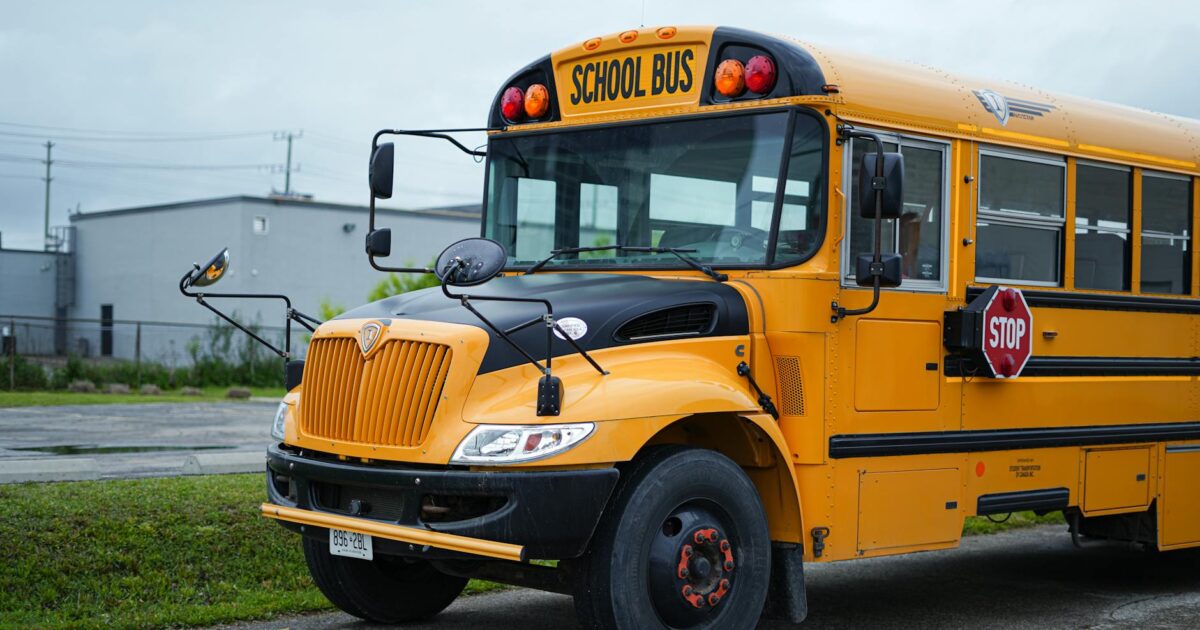
Type C school buses are perhaps the most iconic and widely recognized ‘traditional’ school bus. They are built on a dedicated bus chassis with a distinctive flat front end and the engine mounted conventionally out in front, under a hood. This design is a workhorse for most school districts.
When people ask ‘how long is a school bus,’ they are often picturing a Type C. These buses typically range from 35 to 40 feet in length. This considerable length allows for a much higher passenger capacity, often seating up to 72 or even more students, depending on the specific configuration and seat size.
The longer wheelbase and robust chassis of a Type C bus make it stable for carrying many passengers over long distances, a common requirement for rural school transportation. The longer length also provides more space for safety features and emergency exits.
The Dimensions of a Type D School Bus
Type D school buses are the largest and often considered the most modern in design. They are often referred to as ‘transit-style’ or ‘flat-nose’ buses because the engine is located either at the rear or mid-ship, beneath the floor, rather than under a hood. This placement allows for a more spacious interior and better weight distribution.
Type D buses can be the longest of all school bus types, commonly measuring between 35 to 45 feet. Some specialized configurations can even exceed this. Their design often features a lower floor for easier entry and exit, which is particularly beneficial for students with disabilities. The extended length maximizes passenger capacity, sometimes exceeding 80 students.
These buses are often used for longer routes, larger student populations, or when a more accessible design is needed. Their advanced engineering offers a good balance of capacity, maneuverability (despite their size, due to better wheel placement), and passenger comfort.
What Influences School Bus Length?
Several factors dictate how long a school bus ends up being. The primary driver, as we’ve seen, is the bus type. The chassis manufacturer, the body builder, and the intended use all play significant roles. For instance, a bus designed for a sprawling rural district might prioritize maximum passenger capacity and thus be longer, while a bus for a dense urban school might be shorter for easier navigation.
Passenger capacity is another huge factor. More seats mean more length. Manufacturers have national standards and guidelines to adhere to regarding seating arrangements and the number of passengers per seat, which directly translates to the bus’s overall dimensions. The National School Transportation Association (NSTA) provides guidance, and individual states often have their own regulations that can influence these specifications.
Finally, regulatory requirements and safety standards can influence design choices that affect length. For example, mandated safety features like reinforced side walls, emergency exits, and specialized seating for students with disabilities can add to the overall size and weight of the bus.
Average School Bus Size and Passenger Capacity
To summarize, the ‘average’ school bus length is a bit misleading because of the distinct types. However, if we consider the most common type, the Type C, the average length hovers around 35-40 feet. This length typically accommodates between 60 to 72 students.
Here’s a quick look at typical capacities:
- Type A: 10-16 passengers
- Type B: 14-21 passengers
- Type C: 48-72+ passengers
- Type D: 54-84+ passengers
It’s important to note that ‘passenger’ in bus terminology often refers to children. If an adult is riding, the capacity might be reduced. Manufacturers provide detailed specifications for each model, allowing school districts to choose the bus that best fits their student population and route needs.
The Importance of School Bus Dimensions for Safety
Understanding ‘how long is a school bus’ isn’t just about curiosity; it’s fundamentally linked to safety. The length, wheelbase, and overall structure of a bus are engineered with student safety as the top priority. Longer buses, like Type C and D, often have more robust construction, greater crumple zones, and more space for emergency exits.
The extended length also means more space between rows of seats, which is a critical safety feature. In the event of a collision, this spacing helps absorb impact energy and reduces the risk of passengers colliding with each other or the bus interior. Furthermore, the sheer mass of a larger bus provides a significant safety advantage in traffic collisions with smaller vehicles.
The design considerations that go into determining the length of a school bus are directly tied to meeting stringent federal and state safety standards. These standards ensure that buses are not only efficient for transporting students but also provide a secure environment during their commute.
A Real-World Example: Navigating City Streets
I remember one time, years ago, I was working with a small charter bus company that was asked to provide buses for a special event in downtown Houston. They sent over a fleet of their standard Type C school buses, assuming they’d fit anywhere. Well, let me tell you, those 40-foot giants struggled mightily on some of the narrower, older streets with tight corners. They had to reroute and ended up using a couple of their smaller Type A buses for the most challenging sections. It was a great, albeit stressful, lesson in how crucial the physical dimensions of a bus are, especially when you’re not just on an open highway or a typical suburban route. It really hammered home why understanding ‘how long is a school bus’ matters in practical application.
Frequently Asked Questions
What is the most common length for a school bus?
The most common length for a school bus, specifically the traditional Type C model, is typically between 35 to 40 feet. This size offers a good balance of passenger capacity and maneuverability for most school districts, accommodating a significant number of students safely and efficiently on various routes.
Are all school buses the same length?
No, school buses are not all the same length. They are manufactured in different types (A, B, C, and D), each with its own range of lengths. Type A buses are the shortest, around 18-22 feet, while Type D buses can be the longest, reaching up to 45 feet or more.
How much does a school bus weigh?
The weight of a school bus varies significantly by type and configuration. A smaller Type A bus might weigh around 10,000 to 14,000 pounds, while a large Type C or D bus can weigh anywhere from 24,000 to 36,000 pounds or more when fully loaded with students and equipment.
Can a school bus fit in a standard garage?
Generally, no, a standard school bus cannot fit in a typical residential garage. Most school buses, especially Type C and D, exceed 35 feet in length and 10 feet in height, far surpassing the dimensions of most garages designed for passenger cars and SUVs.
What is the difference between a school bus and a city bus length?
City buses, also known as transit buses, are often comparable in length to larger school buses (Type C and D), typically ranging from 35 to 45 feet. However, city buses are designed for frequent stops and different passenger loading/unloading needs, sometimes featuring a lower floor and different turning radius considerations than school buses.
Final Thoughts on School Bus Dimensions
So, the next time you see a school bus, you’ll know that ‘how long is a school bus’ is a question with a nuanced answer. From the compact Type A buses clocking in around 18-22 feet to the mighty Type D buses stretching up to 45 feet, there’s a wide spectrum of lengths designed to meet diverse transportation needs. Understanding these dimensions isn’t just about trivia; it’s about appreciating the engineering, safety considerations, and logistical planning that go into safely transporting millions of students every day.
Whether you’re planning a route, considering a purchase, or simply curious about the vehicles that play such a vital role in our communities, knowing the typical lengths and types of school buses provides valuable context. They are complex, purpose-built machines, each sized just right for its specific job.




Sabrina
Expert contributor to OrevateAI. Specialises in making complex AI concepts clear and accessible.