
Diffusion Models Explained: Your 2026 Guide
Ever wondered how AI creates those incredible images from text prompts? Diffusion models explained is your answer. These powerful generative AI tools are transforming digital art and content creation. Here’s what you need to know about what makes them tick and how you can start using them.
Last updated: April 26, 2026 (Source: arxiv.org)
This guide will break down diffusion models in a way that’s easy to grasp, even if you’re not a deep learning researcher. We’ll cover how they work, their amazing applications, and how you can get hands-on experience.
What Are Diffusion Models?
At their core, diffusion models are a type of generative model. Think of them as artists that learn to create by observing and then reversing a process of destruction. They excel at generating high-quality data, especially images, that look incredibly realistic.
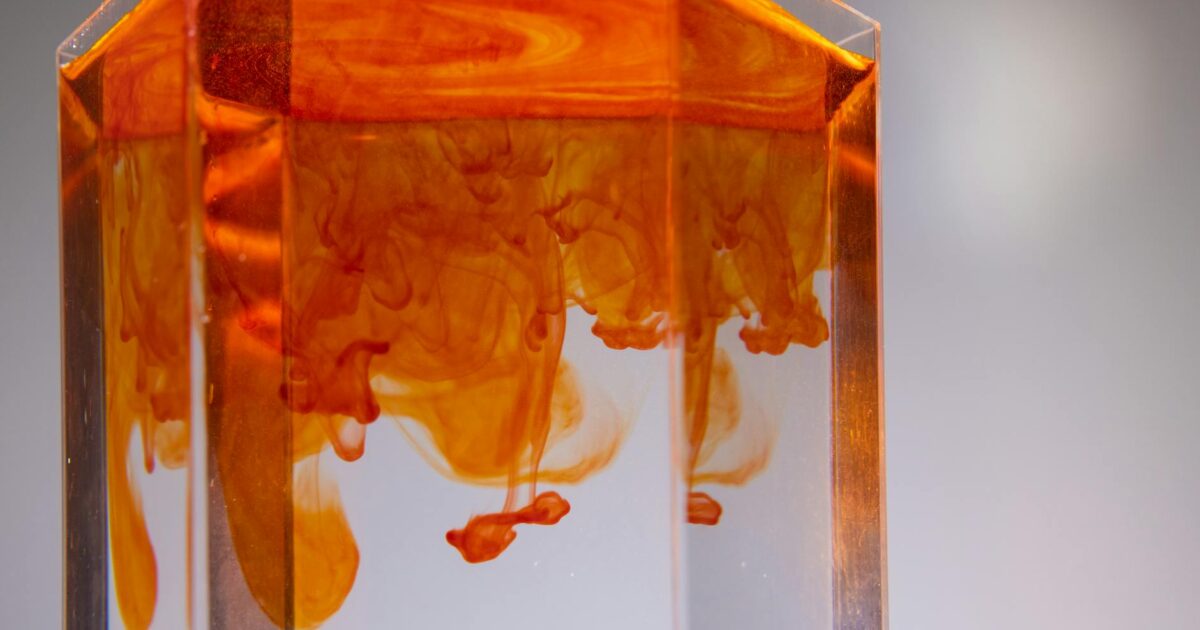
The fundamental idea is borrowed from physics, specifically thermodynamics. Imagine a clear image. Now, imagine gradually adding random noise (like static on a TV screen) until the image is completely indistinguishable from random noise. Diffusion models learn to reverse this process.
How Diffusion Models Work: The Forward and Reverse Processes
To truly grasp diffusion models explained, we need to look at the two key stages: the forward diffusion process and the reverse denoising process.
The Forward Process: Adding Noise
This is the ‘destruction’ phase. We start with a real data sample, like a photograph of a cat. Over a series of many small steps (often hundreds or thousands), we progressively add a tiny amount of Gaussian noise. Each step makes the image slightly more noisy.
By the end of the forward process, the original image is completely overwhelmed by noise, looking like random static. The key here is that this process is fixed and doesn’t involve any learning. We know exactly how much noise is added at each step.
The Reverse Process: Learning to Denoise
This is where the magic and the learning happen. The diffusion model’s job is to learn how to reverse the forward process. It’s trained to take a noisy image at any given step and predict the noise that was added to get there.
Once the model can predict the noise, it can subtract that predicted noise from the noisy image. This effectively takes one step backward in the diffusion process, making the image slightly cleaner. By repeating this denoising step many times, starting from pure noise, the model can gradually reconstruct a realistic image that resembles the data it was trained on.
It’s like learning to un-scramble an egg. The forward process is scrambling, and the model learns how to unscramble it, step by tiny step.
Important: The quality of the generated output heavily depends on the dataset used for training and the model’s architecture. A model trained on cats won’t generate dogs unless it’s also trained on dogs.
Why Are Diffusion Models So Popular Now?
Diffusion models have been around for a while, but recent advancements have propelled them to the forefront of AI image generation. Several factors contribute to their popularity as of April 2026:
- High-Quality Outputs: They consistently produce incredibly detailed and coherent images, often surpassing other generative models like GANs (Generative Adversarial Networks) in terms of realism and diversity.
- Training Stability: Compared to GANs, which can be notoriously difficult to train due to adversarial dynamics, diffusion models tend to be more stable.
- Flexibility: They can be conditioned on various inputs, such as text descriptions (text-to-image), class labels, or even other images, allowing for precise control over the generation process.
The ability to guide the generation with text prompts is a major improvement. It opens up creative possibilities that were previously unimaginable for many users.
Diffusion Model Applications: Beyond Pretty Pictures
While image generation is their most famous application, diffusion models have a much broader range of uses across various fields:
Text-to-Image Generation
This is what most people think of. Models like DALL-E 3, Midjourney v6, and Stable Diffusion XL use diffusion principles to create stunning visuals from simple text descriptions. You type “a photorealistic astronaut riding a horse on the moon,” and the model generates it. The quality and interpretability of these generations have seen continuous improvement through 2026.
Image Editing and Inpainting
Diffusion models can intelligently fill in missing parts of an image (inpainting) or modify existing parts based on context and prompts. Need to remove an unwanted object from a photo? A diffusion model can help. Users report that these tools offer unprecedented control and realism in editing tasks.
Audio Generation
The same principles can be applied to generate realistic audio, from music to speech. Models can learn the ‘noise’ of silence and gradually add meaningful sound. Research in this area continues to expand, promising more sophisticated audio synthesis capabilities.
Video Generation
Researchers are extending diffusion models to generate coherent video sequences, a complex but rapidly advancing area. While still computationally intensive, progress in 2026 shows significant strides in generating longer, more consistent video clips from text prompts.
Scientific Applications
Diffusion models are increasingly employed in scientific research. They are being used in drug discovery for molecular generation, in medical imaging for enhancing scans, and in physics simulations. As reported by EurekAlert!, artificial intelligence is mapping optical properties to subwavelength structures directly via diffusion models, showcasing their power in photonics research as of April 2026.
Latest Update (April 2026)
The field of diffusion models is rapidly evolving. As of April 2026, significant developments are occurring across research and commercial applications. For instance, new algebraic language models are being developed for the inverse design of metamaterials using diffusion transformers, according to a recent publication in Nature. This signifies a growing trend in applying these models to complex scientific and engineering challenges beyond traditional media generation.
Furthermore, the demand for user control over AI-generated content is driving innovation in platform development. TechCrunch recently reported that ComfyUI has achieved a $500 million valuation, highlighting creators’ strong desire for more granular control over AI-generated media. This trend indicates a maturing market where sophisticated tools are needed to harness the full potential of diffusion models.
The quest for faster and more efficient AI models also continues. A Stanford professor has launched an AI startup aiming for speed advantages over existing large language models, as reported by The Business Journals. While not exclusively diffusion models, this pursuit of speed and efficiency is a critical factor influencing the development and adoption of all generative AI technologies, including diffusion models.
Diffusion Models vs. GANs: A Quick Comparison
It’s common to compare diffusion models with GANs (Generative Adversarial Networks), as they are both powerful generative techniques. Here’s a brief comparison as of April 2026:
| Feature | Diffusion Models | GANs |
|---|---|---|
| Output Quality | Generally higher realism and detail, less prone to artifacts. | Can produce high quality but often struggles with mode collapse and artifacts. |
| Training Stability | More stable and easier to train. | Can be unstable and difficult to train (adversarial nature). |
| Generation Speed | Typically slower due to iterative denoising steps. | Generally faster once trained. |
| Control | Highly controllable via conditioning (text, etc.). | Control can be more challenging to implement precisely. |
| Data Requirements | Require large, diverse datasets for optimal performance. | Also require large datasets, but can sometimes learn from smaller ones with careful tuning. |
While GANs were dominant for several years, diffusion models have largely taken the lead in research and high-fidelity generation tasks as of 2026, particularly for text-to-image applications.
How Can You Start Using Diffusion Models?
Getting started with diffusion models is more accessible than ever in 2026. Here are a few ways:
Web-Based Platforms
Numerous websites offer user-friendly interfaces to generate images using diffusion models. Popular options include:
- Midjourney: Known for its artistic and often surreal outputs. Accessible via Discord.
- DALL-E 3 (via ChatGPT Plus/API): Offers excellent prompt adherence and integration with conversational AI.
- Stable Diffusion Online Tools: Many platforms provide free or paid access to Stable Diffusion models with various fine-tuned versions.
These platforms abstract away the complexity, allowing anyone to experiment with prompts and generate images quickly.
Local Installation (for Advanced Users)
For those who want more control, computational power, and privacy, running diffusion models locally is an option. Tools like:
- AUTOMATIC1111 Stable Diffusion Web UI: A popular, feature-rich interface for running Stable Diffusion locally.
- ComfyUI: As reported by TechCrunch, ComfyUI is gaining significant traction for its node-based workflow, offering advanced users unparalleled flexibility and control over the generation pipeline. Its recent $500 million valuation underscores its importance in the creator ecosystem.
- InvokeAI: Another powerful and user-friendly option for local installations.
Running models locally requires a capable GPU (graphics processing unit) and some technical setup, but it offers the most flexibility.
APIs and Developer Tools
Developers can integrate diffusion model capabilities into their own applications using APIs provided by companies like OpenAI, Stability AI, and others. This allows for programmatic generation and manipulation of images.
Challenges and Future Directions
Despite their incredible capabilities, diffusion models face ongoing challenges and areas for future development:
- Computational Cost: Training and running large diffusion models require significant computational resources, making them expensive and energy-intensive. Researchers are actively exploring more efficient architectures and training techniques.
- Speed: The iterative nature of the denoising process can make generation slower compared to some other generative models. Efforts are underway to accelerate this process, such as the work being done by startups aiming for speed advantages over existing models.
- Controllability and Bias: Ensuring precise control over generated outputs and mitigating biases present in training data remain active research areas.
- Ethical Considerations: The potential for misuse, such as generating deepfakes or misinformation, requires careful consideration and the development of robust safety mechanisms.
The field is also exploring new twists on generative AI that address uncertainty, as noted in recent analyses by Tech Xplore. This suggests a move towards models that are not only creative but also reliable in complex or uncertain scenarios.
Frequently Asked Questions
What is the difference between a diffusion model and a GAN?
Diffusion models work by gradually adding noise to data and then learning to reverse this process to generate new data from noise. GANs use a generator and a discriminator network that compete against each other to produce realistic data. As of April 2026, diffusion models generally offer higher quality and more stable training, while GANs can be faster once trained.
Are diffusion models the best AI for image generation in 2026?
For many high-fidelity and controllable image generation tasks, diffusion models are considered state-of-the-art in 2026. They excel in producing realistic and detailed images from text prompts. However, other models might be preferred for specific use cases depending on factors like generation speed requirements or computational budget.
How much VRAM do I need to run diffusion models locally?
The VRAM requirement varies significantly depending on the specific diffusion model, resolution, and settings used. For basic Stable Diffusion models at standard resolutions (e.g., 512×512), 6GB-8GB of VRAM is often sufficient. However, for higher resolutions, larger models, or faster generation, 12GB, 16GB, or even 24GB+ of VRAM is recommended for a smoother experience in 2026.
Can diffusion models generate videos?
Yes, researchers are actively extending diffusion models to generate video sequences. While it’s a more complex task than image generation, significant progress has been made, and diffusion-based video generation models are becoming increasingly capable as of April 2026, though they are still computationally intensive.
What are the ethical concerns surrounding diffusion models?
Key ethical concerns include the potential for generating misinformation or deepfakes, the perpetuation of biases present in training data, copyright issues related to generated content, and the environmental impact due to high computational requirements. Responsible development and deployment are critical.
Conclusion
Diffusion models represent a significant leap forward in generative AI, offering unparalleled quality and control for tasks like image, audio, and even video creation. Their ability to learn from data by reversing a noise-adding process has unlocked new creative frontiers. As of April 2026, the field continues its rapid advancement, with ongoing research focused on improving efficiency, controllability, and expanding applications into scientific discovery and beyond. Whether you’re a casual user exploring web platforms or a developer integrating AI into applications, diffusion models are a transformative technology shaping the future of digital content and innovation.
Sabrina
2 writes for OrevateAi with a focus on agriculture, ai ethics, ai news, ai tools, apparel & fashion. Articles are reviewed before publication for accuracy.


